GST Invoice Rules in India: A Complete Guide
A GST invoice is one of the most important documents for every GST-registered business. It serves as proof of a sale and contains the information required to calculate GST, maintain accounting records, and claim Input Tax Credit (ITC). Issuing GST-compliant invoices helps businesses avoid penalties and ensures smooth tax compliance.
What is a GST Invoice?
A GST invoice, also called a Tax Invoice, is a document issued by a registered supplier when supplying taxable goods or services. It includes details of the seller, buyer, products or services, GST rates, tax amount, and total invoice value.
Businesses use GST invoices for:
- Collecting GST from customers
- Claiming Input Tax Credit (ITC)
- Maintaining accounting records
- Filing GST returns
- Supporting audits and compliance
Mandatory Details in a GST Invoice
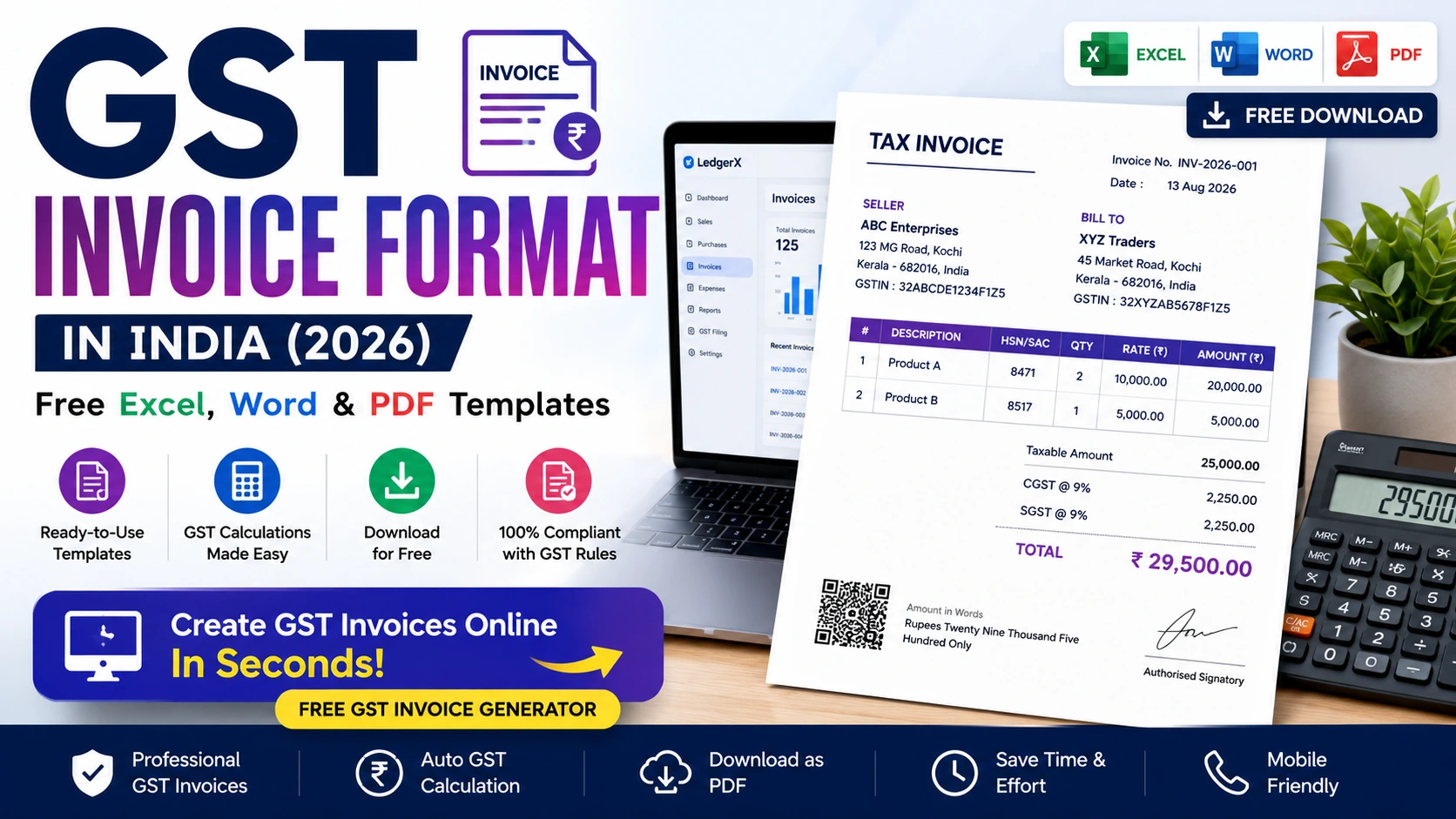
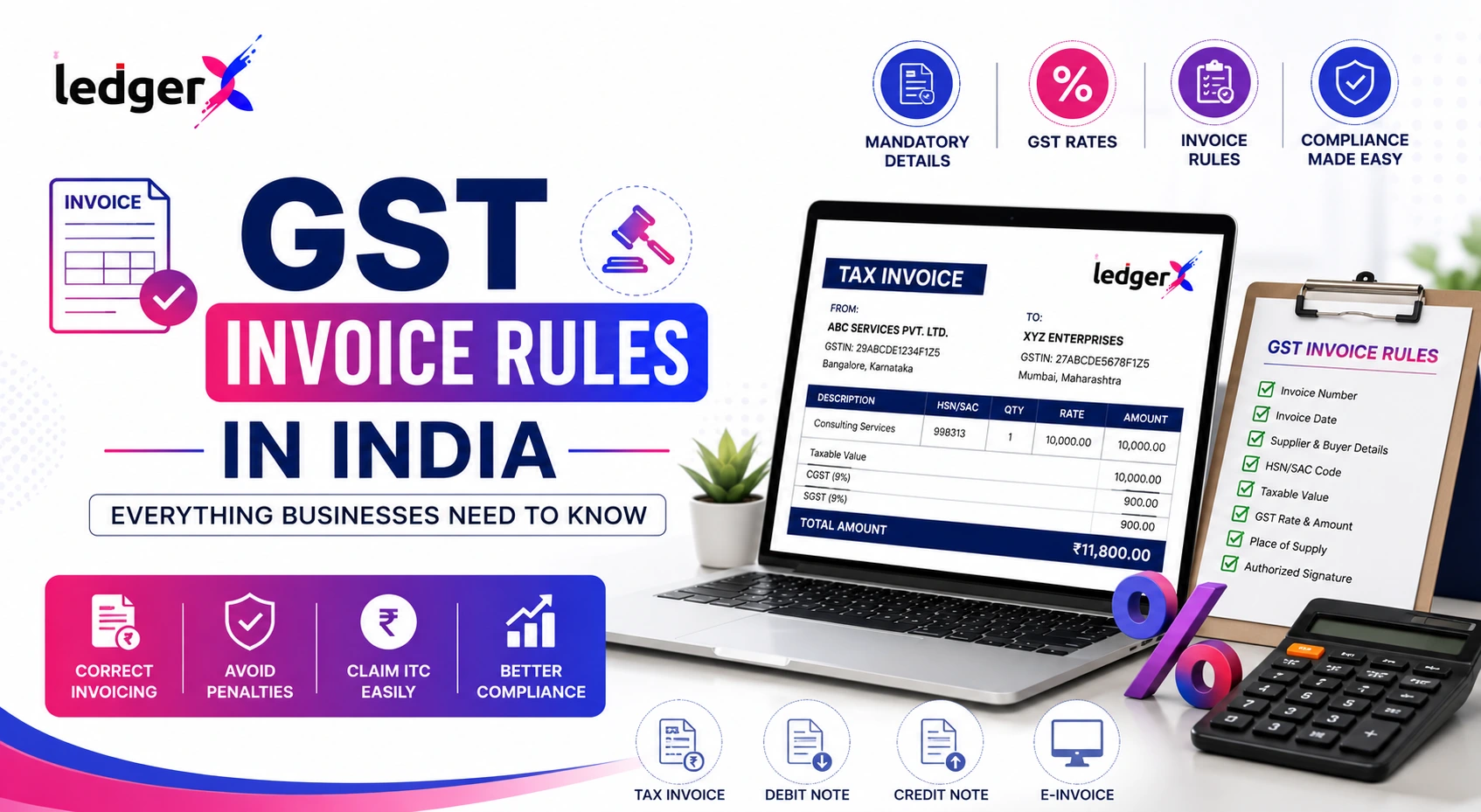
A GST-compliant invoice should generally include:
- Business Name and Address
- GSTIN of the Supplier
- Invoice Number
- Invoice Date
- Customer Name and Address
- Customer GSTIN (for registered buyers)
- Description of Goods or Services
- HSN or SAC Code (where applicable)
- Quantity
- Taxable Value
- CGST, SGST or IGST Rate
- GST Amount
- Total Invoice Amount
- Place of Supply (for interstate transactions)
- Authorized Signature or Digital Signature
Types of GST Invoices
Depending on the nature of the transaction, businesses may issue:
- Tax Invoice – For taxable supplies.
- Bill of Supply – For exempt supplies or composition taxpayers.
- Debit Note – When the taxable value or tax charged needs to be increased.
- Credit Note – When the taxable value or tax charged needs to be reduced.
When Should a GST Invoice Be Issued?
The time of issuing an invoice depends on whether the supply is for goods or services.
- For goods, the invoice is generally issued before or at the time of removal or delivery of goods.
- For services, it is generally issued within the prescribed time limit under GST law after the supply of services.
Businesses should always follow the latest GST regulations for applicable timelines.
Common GST Invoice Mistakes
Avoid these common errors:
- Incorrect GSTIN
- Wrong GST rate
- Missing HSN or SAC code
- Duplicate invoice numbers
- Incorrect taxable value
- Missing customer details
- Incorrect place of supply
- Missing invoice date
- Calculation errors
Reviewing invoices before issuing them helps prevent compliance issues.
Best Practices for GST Invoicing
To maintain accurate GST records:
- Use sequential invoice numbering.
- Verify customer GSTIN before issuing invoices.
- Apply the correct GST rates.
- Maintain digital copies of invoices.
- Reconcile invoices regularly with accounting records.
- File GST returns on time.
- Keep supporting documents safely.
Frequently Asked Questions (FAQs)
What is a GST Invoice?
A GST invoice is a tax document issued by a registered supplier containing details of taxable goods or services and the applicable GST.
Is a GST invoice mandatory?
Yes, GST-registered businesses are generally required to issue GST-compliant invoices for taxable supplies as prescribed under GST law.
What is the difference between a Tax Invoice and a Bill of Supply?
A Tax Invoice is issued for taxable supplies, while a Bill of Supply is generally issued for exempt supplies or by eligible composition taxpayers.
Why is a GST invoice important?
It helps businesses maintain compliance, claim Input Tax Credit, prepare GST returns, and maintain proper accounting records.
Conclusion
Issuing accurate GST invoices is essential for maintaining GST compliance and ensuring smooth business operations. A properly prepared invoice not only helps businesses calculate taxes correctly but also enables customers to claim eligible Input Tax Credit and supports accurate GST return filing.
Managing invoices manually can become challenging as your business grows. LedgerX Accounting Software helps businesses create GST-compliant invoices, manage customer and supplier records, calculate GST automatically, maintain accounting books, and generate GST-ready reports. Whether you're a startup, retailer, wholesaler, manufacturer, freelancer, or service provider, LedgerX simplifies invoicing and helps keep your accounting organized.