GST Registration Process in India: The Complete Guide
The Goods and Services Tax (GST) has transformed India's indirect taxation system by replacing multiple state and central taxes with a single unified tax. Whether you're starting a new business, selling products online, providing professional services, or expanding your company, understanding the GST registration process is essential for legal compliance and smooth business operations.
GST registration provides businesses with a GST Identification Number (GSTIN), allowing them to collect GST from customers, claim Input Tax Credit (ITC), and file GST returns.
In this comprehensive guide, you'll learn everything from GST basics to advanced registration procedures, eligibility criteria, required documents, online registration steps, common mistakes, compliance requirements, and frequently asked questions.
Table of Contents
- What is GST?
- What is GST Registration?
- Who Needs GST Registration?
- GST Registration Turnover Limits
- Types of GST Registration
- Benefits of GST Registration
- Documents Required for GST Registration
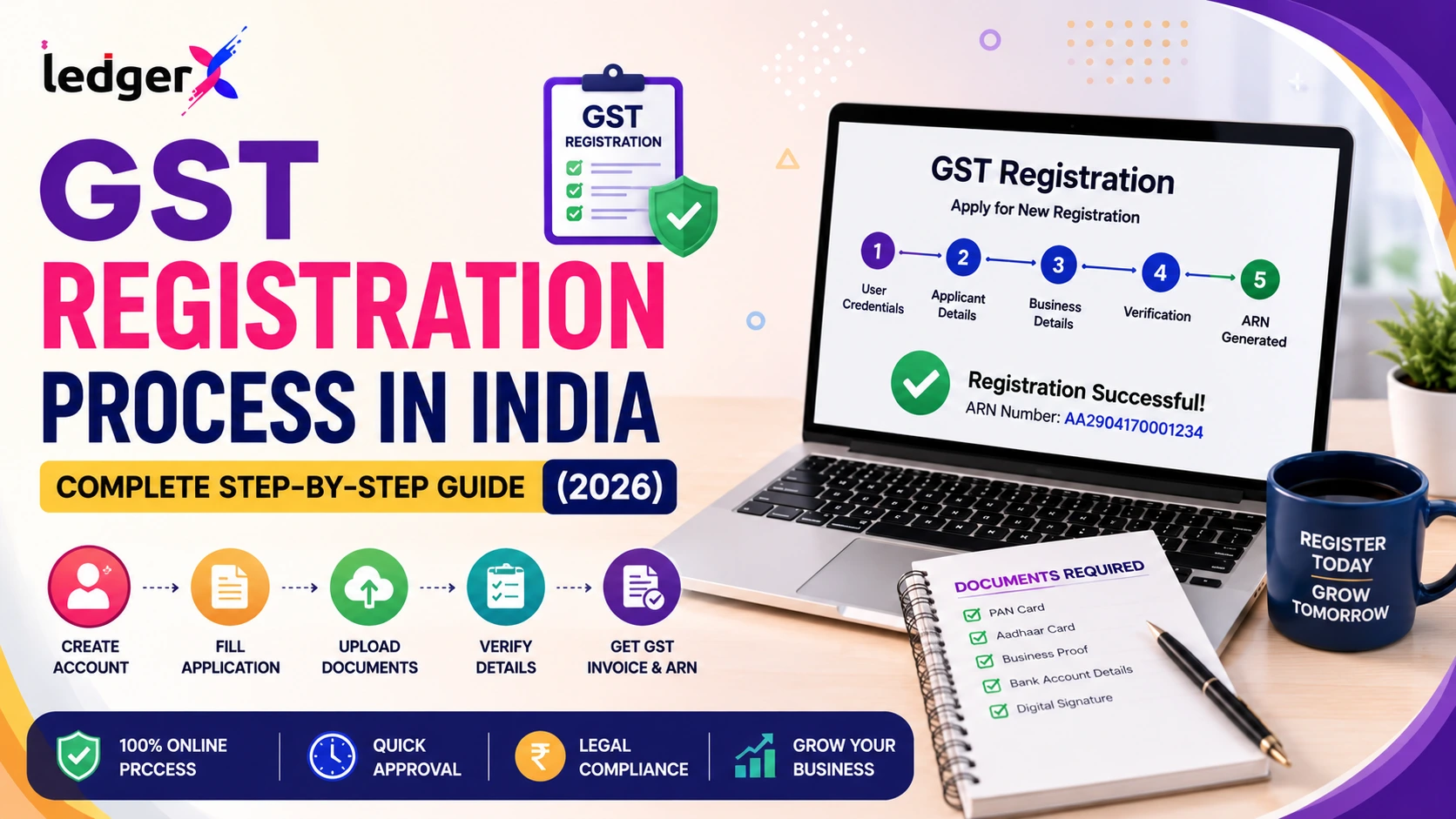
- GST Registration Process (Step-by-Step)
- How to Apply for GST Registration Online
- How to Verify GSTIN
- GST Registration Certificate
- GST Registration Fees
- GST Registration Time
- Voluntary GST Registration
- GST Registration for Different Business Types
- GST Registration for E-commerce Sellers
- GST Registration for Freelancers
- GST Registration for Exporters
- GST Registration for Startups
- Common GST Registration Mistakes
- GST Registration Cancellation
- GST Compliance After Registration
- Frequently Asked Questions
- Conclusion
What is GST?
Goods and Services Tax (GST) is a destination-based indirect tax levied on the supply of goods and services in India.
GST replaced several taxes such as:
- VAT
- Service Tax
- Central Excise Duty
- Entry Tax
- Luxury Tax
- Entertainment Tax
- Purchase Tax
GST simplifies taxation by providing a single tax structure across the country.
What is GST Registration?
GST Registration is the process of obtaining a Goods and Services Tax Identification Number (GSTIN) from the Government of India.
A GSTIN is a unique 15-digit number assigned to every registered taxpayer.
Once registered, businesses can:
- Collect GST from customers
- Claim Input Tax Credit (ITC)
- File GST returns
- Sell legally across India
- Supply goods to government organizations
- Register on most e-commerce marketplaces
Who Needs GST Registration?
GST registration is mandatory for many businesses, including:
- Sole Proprietorships
- Partnership Firms
- LLPs
- Private Limited Companies
- Public Limited Companies
- One Person Companies (OPCs)
- Freelancers (in applicable cases)
- Consultants
- Contractors
- Importers
- Exporters
- E-commerce Sellers
- Manufacturers
- Wholesalers
- Retailers
GST Registration Turnover Limits
GST registration is generally mandatory if annual turnover exceeds the applicable threshold prescribed by law. These thresholds may vary depending on:
- Whether the business supplies goods or services
- The state or Union Territory
- Special category states
- Applicable notifications and amendments
Because GST thresholds can change through government notifications, businesses should always verify the latest limits before applying.
Registration is also compulsory in certain situations regardless of turnover, such as specific categories of interstate suppliers, e-commerce operators, and other notified persons.
Types of GST Registration
Different types of GST registration include:
Regular Taxpayer
Suitable for most businesses operating in India.
Composition Scheme
Designed for eligible small taxpayers subject to prescribed turnover limits and conditions.
Casual Taxable Person
For businesses operating temporarily in another state.
Non-Resident Taxable Person
For foreign businesses supplying goods or services in India.
Input Service Distributor (ISD)
For organizations distributing input tax credit across branches.
Tax Deductor at Source (TDS)
Applicable to notified entities required to deduct GST at source.
Tax Collector at Source (TCS)
Applicable mainly to notified e-commerce operators.
Benefits of GST Registration
Registering under GST provides several advantages.
Legal Recognition
Operate as a registered taxpayer.
Input Tax Credit (ITC)
Claim GST paid on eligible business purchases.
Interstate Business
Supply goods and services across India where permitted.
Better Business Credibility
Many corporate clients and government departments prefer dealing with GST-registered businesses.
Easier Loan Processing
Banks and financial institutions often review GST records during credit assessments.
E-commerce Selling
Many online marketplaces require GST registration for sellers depending on applicable rules.
Documents Required for GST Registration
The required documents depend on the type of business.
Generally, businesses need:
- PAN Card
- Aadhaar Card
- Passport-size Photograph
- Business Address Proof
- Electricity Bill or Property Tax Receipt (where applicable)
- Rent Agreement (if premises are rented)
- Bank Account Proof
- Cancelled Cheque or Bank Statement
- Incorporation Certificate (for companies)
- Partnership Deed (for partnerships)
- Digital Signature Certificate (where applicable)
- Authorization Letter or Board Resolution (where required)
Ensure that all documents are clear, valid, and up to date before applying.
Step-by-Step GST Registration Process
Step 1: Visit the GST Portal
Access the official GST portal and choose the option to register as a new taxpayer.
Step 2: Generate Temporary Reference Number (TRN)
Provide basic details such as:
- PAN
- Mobile Number
- Email Address
- State
After OTP verification, a Temporary Reference Number (TRN) is generated.
Step 3: Complete the Application
Enter detailed information including:
- Business Name
- Trade Name
- Constitution of Business
- Principal Place of Business
- Additional Places of Business
- Bank Details
- Goods and Services supplied
- Promoters or Partners
- Authorized Signatory
Step 4: Upload Documents
Upload all required supporting documents in the prescribed format.
Step 5: Verification
Verify the application using the applicable method, such as Aadhaar authentication, electronic verification, or digital signature, depending on the business type and portal requirements.
Step 6: Application Processing
The tax authorities review the application. They may approve it directly or seek clarification if additional information is required.
Step 7: Receive GSTIN
After successful verification and approval, the GSTIN and Registration Certificate are issued.
How to Apply for GST Registration Online
The online process generally involves:
- Create a new registration application.
- Verify PAN, mobile number, and email.
- Fill in business details.
- Upload supporting documents.
- Complete verification.
- Submit the application.
- Track application status.
- Download the GST Registration Certificate after approval.
How to Check GST Registration Status
After submission, applicants can track the application using the Application Reference Number (ARN).
Typical status updates include:
- Pending
- Processing
- Clarification Required
- Approved
- Rejected
How to Verify a GSTIN
Before doing business with a supplier or customer, verify their GSTIN.
GSTIN verification helps confirm:
- Business name
- Registration status
- State of registration
- Business constitution
- Registration date
Verifying GSTIN helps reduce compliance risks and supports accurate Input Tax Credit claims.
GST Registration Certificate
Once approved, the registration certificate generally contains:
- GSTIN
- Legal Business Name
- Trade Name
- Constitution of Business
- Principal Place of Business
- Effective Date of Registration
- Jurisdiction Details
Businesses should display the GST registration details at their principal place of business where required by law.
GST Registration Fees
The government generally does not charge a fee for obtaining GST registration through the official portal.
However, businesses may incur professional fees if they choose to hire consultants, accountants, or tax practitioners for assistance.
How Long Does GST Registration Take?
The processing time depends on:
- Document accuracy
- Aadhaar authentication
- Application completeness
- Verification requirements
- Departmental review
Applications with complete and accurate information are typically processed more quickly than those requiring clarification.
Voluntary GST Registration
Businesses that are not legally required to register may still choose voluntary registration.
Potential advantages include:
- Claiming eligible Input Tax Credit
- Enhanced business credibility
- Easier expansion
- Better access to B2B customers
- Improved compliance profile
Businesses should also evaluate the additional return filing and compliance responsibilities before opting for voluntary registration.
GST Registration for Different Business Types
GST Registration for Sole Proprietorship
Usually requires the proprietor's PAN, Aadhaar, bank details, and business address proof.
GST Registration for Partnership Firm
Requires the partnership deed, partner details, PAN, and supporting documents.
GST Registration for Private Limited Company
Requires incorporation documents, PAN, director details, registered office proof, and other applicable records.
GST Registration for LLP
Requires LLP incorporation documents and partner details.
GST Registration for Freelancers
Freelancers providing services may need GST registration depending on the nature of services, place of supply, turnover, and applicable legal provisions.
Professional advice may be useful when determining whether registration is mandatory.
GST Registration for E-commerce Sellers
Many e-commerce platforms require sellers to comply with GST provisions before listing products.
Registration requirements vary depending on the business model, platform, and applicable GST rules.
GST Registration for Exporters
Exporters often register under GST to comply with export regulations and claim eligible tax benefits or refunds where applicable.
Common Mistakes During GST Registration
Avoid these common mistakes:
- Incorrect PAN details
- Wrong business address
- Uploading unclear documents
- Incorrect HSN or SAC classification
- Incorrect bank information
- Using an inactive email or mobile number
- Mismatched business information
- Incomplete application
- Ignoring clarification notices
Review every section carefully before submission.
GST Compliance After Registration
Registration is only the first step. Businesses must also comply with ongoing GST obligations.
These include:
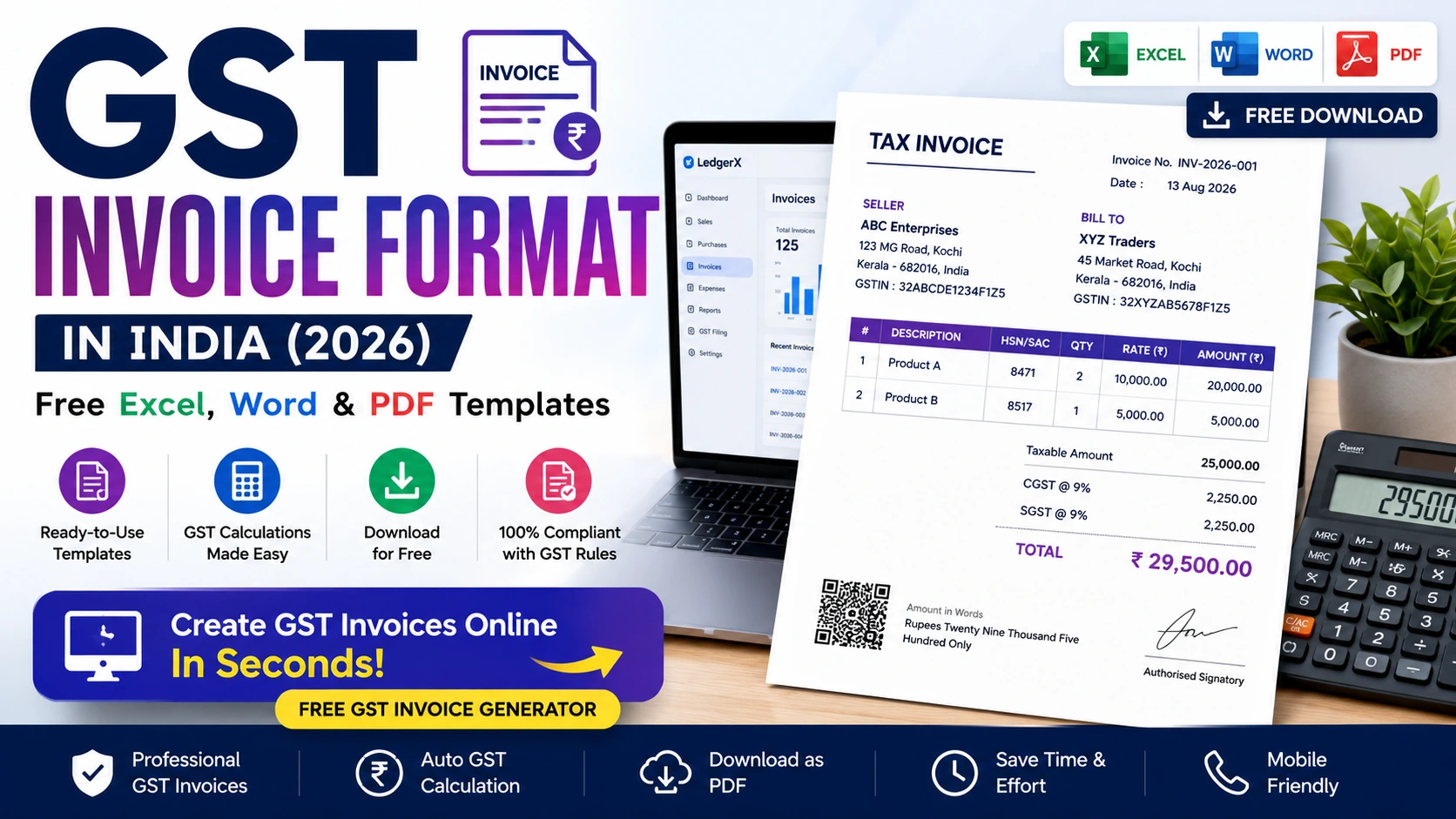
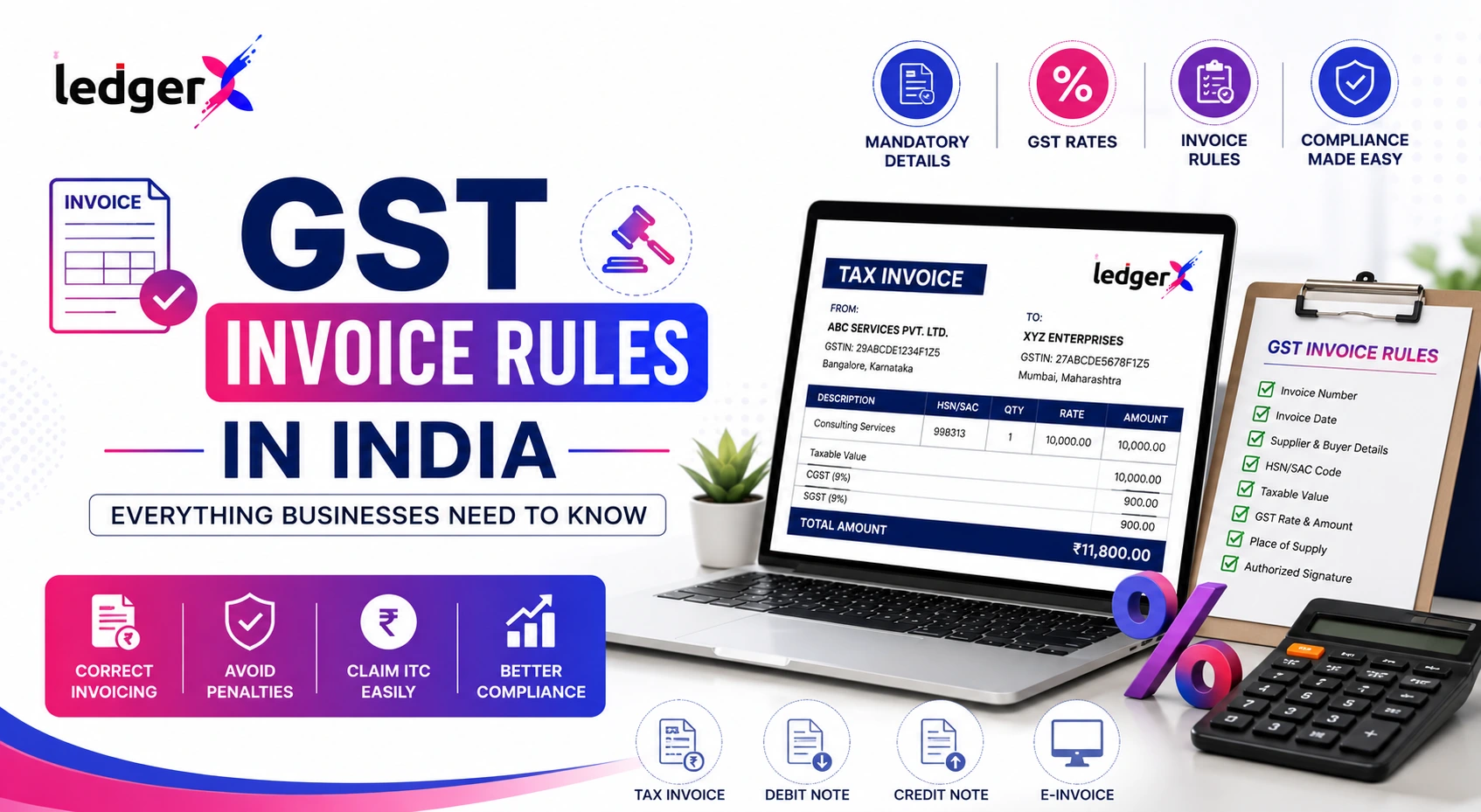
- Issuing GST-compliant invoices
- Filing GST returns on time
- Maintaining accounting records
- Reconciling Input Tax Credit
- Paying GST liabilities within due dates
- Preserving supporting documents
- Updating registration details when business information changes
Maintaining proper compliance helps avoid interest, penalties, and unnecessary disputes.
Frequently Asked Questions (FAQs)
What is GST Registration?
GST Registration is the process of obtaining a GST Identification Number (GSTIN), enabling eligible businesses to collect GST, claim Input Tax Credit, and comply with GST laws.
Is GST Registration mandatory?
It is mandatory for businesses that meet the applicable legal conditions, including prescribed turnover limits and other notified categories under GST law.
Is GST Registration free?
Yes. GST registration through the official government portal is generally free. Professional service providers may charge separate fees for assistance.
How long does GST Registration take?
Processing time varies depending on verification requirements and application accuracy.
Can I register voluntarily?
Yes. Businesses that are not required to register may apply voluntarily if they wish to avail themselves of GST registration benefits and are prepared to meet ongoing compliance obligations.
Can I have multiple GST registrations?
Yes. Businesses operating in different states generally require separate GST registrations for each state where registration is applicable.
Can GST Registration be cancelled?
Yes. GST registration can be cancelled under specified legal conditions, either voluntarily or by the tax authorities, subject to the applicable rules.
Conclusion
GST registration is an important step for businesses operating in India. It enables eligible businesses to comply with tax regulations, collect GST, claim Input Tax Credit, and participate confidently in the formal economy. Understanding the registration process, maintaining accurate documentation, and meeting ongoing compliance requirements can help businesses avoid delays and penalties.
Managing GST manually can become challenging as transaction volumes increase. LedgerX Accounting Software simplifies GST accounting by helping businesses create GST-compliant invoices, maintain purchase and sales records, track Input and Output GST, generate GST-ready reports, manage financial statements, and organize accounting records from a single platform. Whether you're a startup, freelancer, retailer, wholesaler, manufacturer, service provider, or accountant, LedgerX Accounting Software can help streamline your GST accounting and day-to-day bookkeeping.