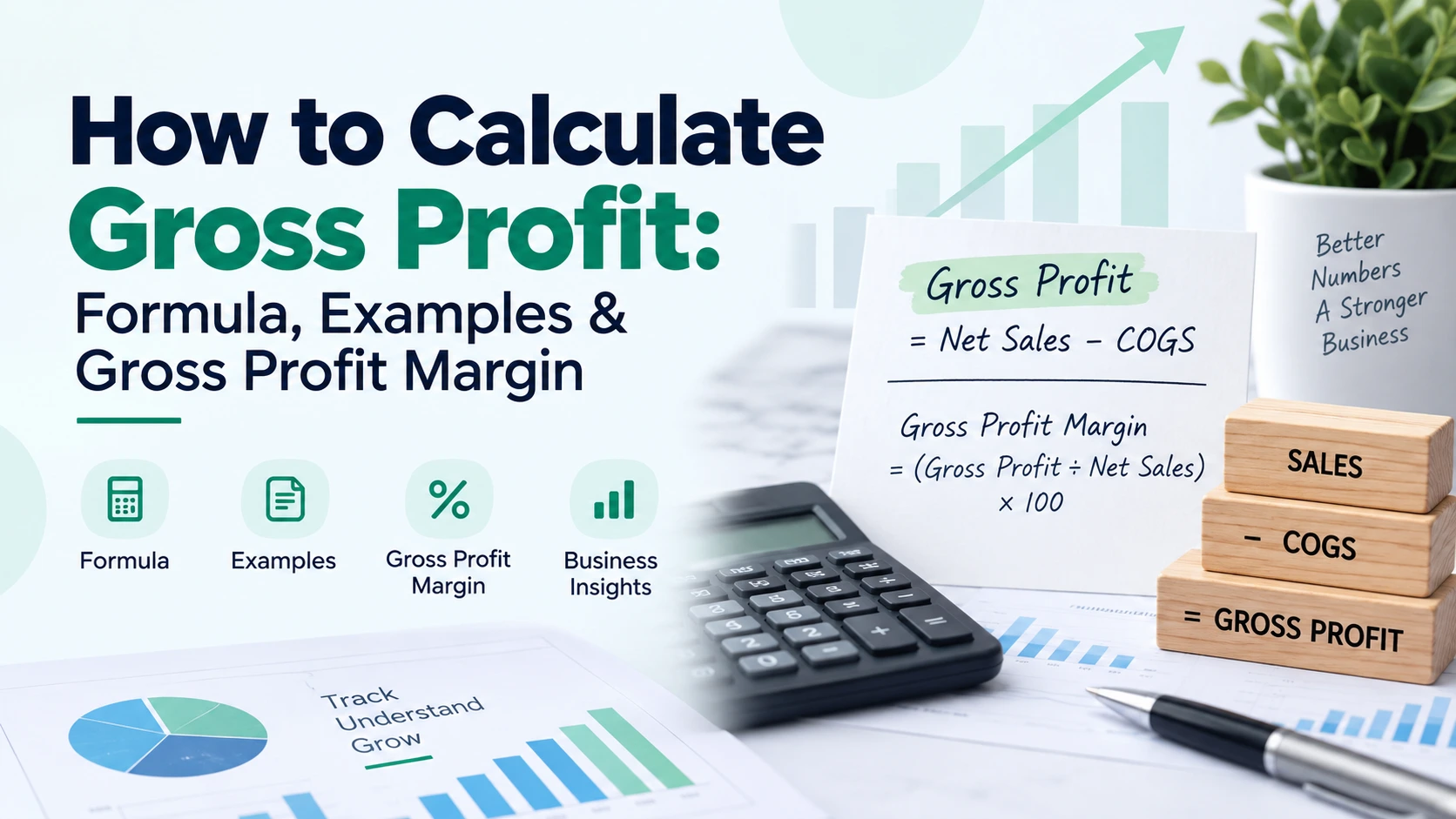
How to Calculate Gross Profit: Formula, Examples & Gross Profit Margin
Gross profit is one of the most useful profitability measures for a business. It shows how much money remains from sales after accounting for the direct costs associated with the goods or services sold.
For a retailer, wholesaler or manufacturer, gross profit can help answer an important question: How much does the business retain from its sales after covering the direct cost of those sales?
The calculation itself is simple, but understanding COGS, gross profit margin, gross profit ratio and the difference between gross and net profit is important when using the number to evaluate business performance.
What Is Gross Profit?
Gross profit is the amount left after subtracting the cost of goods sold (COGS) from net sales or applicable revenue.
Gross Profit Formula
Gross Profit = Net Sales − Cost of Goods Sold (COGS)
For example, if a business has:
- Net Sales = ₹10,00,000
- COGS = ₹6,00,000
Then:
Gross Profit = ₹10,00,000 − ₹6,00,000
Gross Profit = ₹4,00,000
The business has ₹4 lakh in gross profit before deducting operating expenses such as administration, marketing, office expenses, interest and taxes.
What Is Cost of Goods Sold (COGS)?
Before calculating gross profit, you need to understand COGS.
Cost of Goods Sold represents the direct costs associated with the goods or services sold during a particular period.
For a retailer, COGS may primarily relate to the purchase cost of products that were sold.
For a manufacturer, it may include direct materials, direct labour and other applicable production costs.
For a service business, the calculation can depend on the nature of the service and which costs are considered directly attributable to delivering it.
COGS generally does not include ordinary overhead expenses such as office rent, marketing or administrative costs when calculating gross profit. The exact classification can vary according to the business and accounting method.
How to Calculate Gross Profit Step by Step
You can calculate gross profit in three basic steps.
Step 1: Determine Net Sales
Start with sales for the period and account for applicable returns, discounts and allowances to arrive at net sales.
Step 2: Calculate COGS
Determine the direct cost associated with the goods or services sold during the same period.
For an inventory-based business, a commonly used formula is:
COGS = Opening Inventory + Purchases + Direct Costs − Closing Inventory
The exact calculation can depend on the accounting system and applicable accounting practices.
Step 3: Subtract COGS From Net Sales
Use:
Gross Profit = Net Sales − COGS
The result is your gross profit for the period.
Gross Profit Example
Suppose a retail business records the following figures for a month:
| Particulars | Amount |
|---|---|
| Gross Sales | ₹8,00,000 |
| Sales Returns & Discounts | ₹20,000 |
| Net Sales | ₹7,80,000 |
| COGS | ₹4,80,000 |
Now calculate:
Gross Profit = ₹7,80,000 − ₹4,80,000
Gross Profit = ₹3,00,000
The business generated ₹3 lakh in gross profit during the month.
This does not mean the business earned ₹3 lakh as its final profit because operating expenses still need to be considered.
What Is Gross Profit Margin?
Gross profit is an amount expressed in currency.
Gross profit margin expresses that amount as a percentage of net sales.
Gross Profit Margin Formula
Gross Profit Margin = (Gross Profit ÷ Net Sales) × 100
Or:
Gross Profit Margin = [(Net Sales − COGS) ÷ Net Sales] × 100
Using the previous example:
- Gross Profit = ₹3,00,000
- Net Sales = ₹7,80,000
Therefore:
Gross Profit Margin = (₹3,00,000 ÷ ₹7,80,000) × 100
Gross Profit Margin = 38.46%
This means approximately 38.46% of the business's net sales remained after the cost of goods sold.
What Is Gross Profit Ratio?
You may also see the term Gross Profit Ratio used in accounting.
The formula is generally:
Gross Profit Ratio = (Gross Profit ÷ Net Sales) × 100
In many contexts, gross profit ratio and gross profit margin refer to essentially the same percentage-based measure.
For example:
- Net Sales = ₹10,00,000
- Gross Profit = ₹3,50,000
Gross Profit Ratio = (₹3,50,000 ÷ ₹10,00,000) × 100
Gross Profit Ratio = 35%
Gross Profit vs Gross Profit Margin
Although they are closely related, gross profit and gross profit margin are not the same thing.
| Gross Profit | Gross Profit Margin |
|---|---|
| Expressed as money | Expressed as percentage |
| Shows gross profit amount | Shows gross profit relative to sales |
| Formula: Sales − COGS | Gross Profit ÷ Sales × 100 |
| Example: ₹3,00,000 | Example: 38.46% |
Gross profit tells you how much gross profit the business generated.
Gross profit margin tells you what percentage of sales that gross profit represents.
Gross Profit vs Net Profit
This is another common source of confusion.
Gross Profit
Gross Profit = Net Sales − COGS
It focuses on the direct costs associated with goods or services sold.
Net Profit
Net profit is calculated after accounting for additional expenses and applicable income items.
A simplified representation is:
Net Profit = Gross Profit − Operating Expenses ± Other Applicable Income/Expenses
For example:
| Particulars | Amount |
|---|---|
| Net Sales | ₹10,00,000 |
| COGS | ₹6,00,000 |
| Gross Profit | ₹4,00,000 |
| Operating Expenses | ₹2,50,000 |
| Other Expenses/Adjustments | ₹30,000 |
| Net Profit | ₹1,20,000 |
The business therefore has:
Gross Profit = ₹4,00,000
but:
Net Profit = ₹1,20,000
Gross profit and net profit answer different questions, so both are useful when evaluating business performance.
Why Is Gross Profit Important for a Business?
Gross profit can provide insight into the economics of selling products or services.
1. Understand Product Profitability
A business can compare the gross profit generated by different products or product categories.
2. Evaluate Pricing
If selling prices remain unchanged while direct costs increase, gross profit can decrease.
Monitoring gross profit can therefore help businesses evaluate pricing decisions.
3. Monitor Cost Changes
Increasing purchase costs, material costs or other direct costs can affect gross profit.
4. Compare Performance Over Time
Businesses can compare gross profit and gross margins across:
- Months
- Quarters
- Financial years
- Products
- Product categories
5. Support Business Decisions
Gross profit information can help business owners evaluate pricing, purchasing and product-mix decisions.
However, gross profit should not be considered in isolation. A business can have a strong gross margin but still have low net profit because of high operating expenses.
What Is a Good Gross Profit Margin?
There is no single gross profit margin that is ideal for every business.
Margins vary significantly depending on:
- Industry
- Product type
- Business model
- Pricing
- Supplier costs
- Competition
- Operating structure
- Scale
For example, a software or professional service business may have a very different cost structure from a retailer or manufacturer.
Therefore, businesses should generally compare their gross margin with:
- Their own historical performance
- Similar products
- Relevant industry benchmarks
- Changes in direct costs
Rather than asking only “Is my gross margin good?”, ask:
“Is my gross margin improving or declining, and why?”
How to Improve Gross Profit
Businesses can improve gross profit through several approaches.
Increase Selling Prices
Where market conditions allow, adjusting prices can increase gross profit per sale.
Reduce Direct Costs
Businesses can negotiate better supplier pricing, reduce material waste or improve purchasing efficiency.
Focus on Higher-Margin Products
Understanding product-level profitability can help businesses identify products that contribute more gross profit.
Reduce Discounts and Returns
Excessive discounts and product returns can reduce net sales and affect gross profit.
Review Supplier Costs
Regularly comparing supplier pricing can help identify opportunities to reduce COGS.
Improve Inventory Management
Better inventory management can help businesses reduce unnecessary stock, wastage and purchasing inefficiencies.
Gross Profit Example for a Manufacturing Business
Consider a small manufacturer producing furniture.
During one month:
- Net Sales = ₹15,00,000
- Raw Materials = ₹6,00,000
- Direct Labour = ₹2,00,000
- Other applicable direct production costs = ₹1,00,000
Therefore:
COGS = ₹6,00,000 + ₹2,00,000 + ₹1,00,000
COGS = ₹9,00,000
Now:
Gross Profit = ₹15,00,000 − ₹9,00,000
Gross Profit = ₹6,00,000
Gross Profit Margin:
₹6,00,000 ÷ ₹15,00,000 × 100 = 40%
The manufacturer therefore generated a gross profit margin of 40% for the period, based on these illustrative figures.
How Accounting Software Helps Track Gross Profit
Calculating gross profit once using a formula is easy.
The challenge for a growing business is calculating it accurately and consistently every month.
A business may need to continuously track:
- Sales
- Purchases
- Inventory
- Product costs
- Sales returns
- Purchase transactions
- Closing stock
- Expenses
- Financial reports
Accounting software can bring these transactions together and generate financial reports based on the recorded data.
For businesses using LedgerX, sales, purchases, inventory and financial reporting are managed within the same accounting platform. LedgerX provides Profit & Loss and other financial reports that can help businesses review business performance without maintaining separate calculation spreadsheets.
Explore LedgerX Accounting Software
The accuracy of any calculated profit figure still depends on correctly recording transactions, costs, inventory and other relevant accounting information.
Gross Profit Calculation Using a Profit & Loss Statement
Gross profit is normally presented within the Profit & Loss or income statement before operating expenses.
A simplified structure looks like this:
Sales / Revenue
− Cost of Goods Sold
= Gross Profit
− Operating Expenses
= Operating Profit
± Other Applicable Items
= Net Profit
This structure helps business owners understand where profit is being generated and where costs are reducing the final result.
Common Mistakes When Calculating Gross Profit
Mistake 1: Confusing Gross Profit With Net Profit
Gross profit does not account for all business expenses.
Mistake 2: Using the Wrong Sales Figure
Returns, discounts and allowances may affect net sales.
Mistake 3: Including Every Business Expense in COGS
COGS focuses on costs associated with the goods or services sold. Administrative and other indirect expenses are generally treated separately, subject to the applicable accounting treatment.
Mistake 4: Ignoring Inventory Changes
For inventory-based businesses, opening and closing inventory can affect COGS.
Mistake 5: Comparing Different Periods Without Context
A gross margin change may result from pricing, product mix, supplier costs, discounts or other business changes.
Gross Profit Formula: Quick Reference
| Metric | Formula |
|---|---|
| Gross Profit | Net Sales − COGS |
| Gross Profit Margin | Gross Profit ÷ Net Sales × 100 |
| Gross Profit Ratio | Gross Profit ÷ Net Sales × 100 |
| COGS | Opening Inventory + Purchases + Direct Costs − Closing Inventory |
| Net Profit | Gross Profit − Applicable Operating/Other Expenses + Applicable Income |
These formulas provide a starting point, but the exact accounting treatment can depend on the business, accounting framework and nature of the transaction.
Frequently Asked Questions
What is the formula for gross profit?
Gross Profit = Net Sales − Cost of Goods Sold (COGS).
How do you calculate gross profit margin?
Use:
Gross Profit Margin = (Gross Profit ÷ Net Sales) × 100.
What is the difference between gross profit and net profit?
Gross profit is calculated after deducting COGS from net sales. Net profit considers additional operating and other applicable expenses and income.
Is gross profit the same as gross margin?
No. Gross profit is a monetary amount, while gross margin expresses gross profit as a percentage of net sales.
What is COGS?
COGS, or Cost of Goods Sold, represents the direct costs associated with the goods or services sold during a period.
Can gross profit be negative?
Yes. If COGS exceeds net sales for a period, the resulting gross profit is negative, indicating that the direct costs exceeded the applicable sales.
How often should a business calculate gross profit?
Businesses can monitor gross profit monthly or more frequently depending on transaction volume and reporting needs. Regular monitoring can help identify changes in pricing, costs and product profitability.
Conclusion
Gross profit is a fundamental measure for understanding how efficiently a business converts sales into profit before operating expenses.
The basic formula is simple:
Gross Profit = Net Sales − COGS
But businesses should also monitor gross profit margin, because the percentage makes it easier to compare profitability across different periods, products and business sizes.
For growing businesses, maintaining accurate sales, purchase, inventory and cost records is essential for producing meaningful gross profit figures. Accounting software can help centralize these records and make financial reporting easier to manage.
Understanding gross profit is therefore not just about knowing a formula. It is about understanding how pricing, costs, inventory and sales affect the financial performance of your business.