
Current Assets vs Current Liabilities: Complete Guide for Small Businesses (2026)
Understanding your business finances starts with knowing what your business owns and what it owes. These are represented as current assets and current liabilities on the balance sheet.
Knowing the difference helps business owners maintain healthy cash flow, measure liquidity, and make better financial decisions.
This guide explains current assets and current liabilities with practical examples.
What are Current Assets?
Current assets are assets that are expected to be converted into cash, sold, or consumed within one year.
They help businesses meet day-to-day operating expenses and short-term financial obligations.
Examples of Current Assets
- Cash in Hand
- Bank Balance
- Accounts Receivable (Customers)
- Inventory (Stock)
- GST Input Credit
- Short-term Investments
- Advance Payments
- Prepaid Expenses
These assets are essential for running daily business operations.
What are Current Liabilities?
Current liabilities are obligations that a business must pay within one year.
These usually arise from regular business activities like purchasing inventory, taking short-term loans, or collecting GST.
Examples of Current Liabilities
- Supplier Payables
- Outstanding Expenses
- GST Payable
- TDS/TCS Payable
- Short-term Loans
- Employee Salaries Payable
- Utility Bills
- Taxes Payable
Managing liabilities properly helps maintain a healthy business cash flow.
Difference Between Current Assets and Current Liabilities
| Current Assets | Current Liabilities |
|---|---|
| Money the business owns | Money the business owes |
| Increase business liquidity | Reduce available cash |
| Converted into cash within one year | Paid within one year |
| Recorded on Asset side | Recorded on Liability side |
Example
Suppose your business has the following balances:
Current Assets
| Item | Amount |
|---|---|
| Cash | ₹80,000 |
| Bank Balance | ₹2,20,000 |
| Inventory | ₹3,00,000 |
| Customer Receivables | ₹1,00,000 |
Total Current Assets = ₹7,00,000
Current Liabilities
| Item | Amount |
|---|---|
| Supplier Payables | ₹1,80,000 |
| GST Payable | ₹40,000 |
| Salary Payable | ₹30,000 |
Total Current Liabilities = ₹2,50,000
Working Capital Formula
Working Capital is calculated using:
Working Capital = Current Assets − Current Liabilities
Using the above example:
Current Assets = ₹7,00,000 Current Liabilities = ₹2,50,000 Working Capital = ₹4,50,000
A positive working capital indicates that your business has sufficient short-term funds to meet its obligations.
Why are Current Assets Important?
Current assets help businesses:
- Maintain daily operations
- Pay short-term expenses
- Improve cash flow
- Purchase inventory
- Invest in business growth
- Handle emergencies
Higher current assets generally indicate better financial health.
Why are Current Liabilities Important?
Current liabilities help businesses:
- Track outstanding payments
- Plan cash requirements
- Manage supplier relationships
- Ensure timely GST payments
- Avoid penalties and late fees
Keeping liabilities under control improves financial stability.
How LedgerX Helps Manage Current Assets and Liabilities
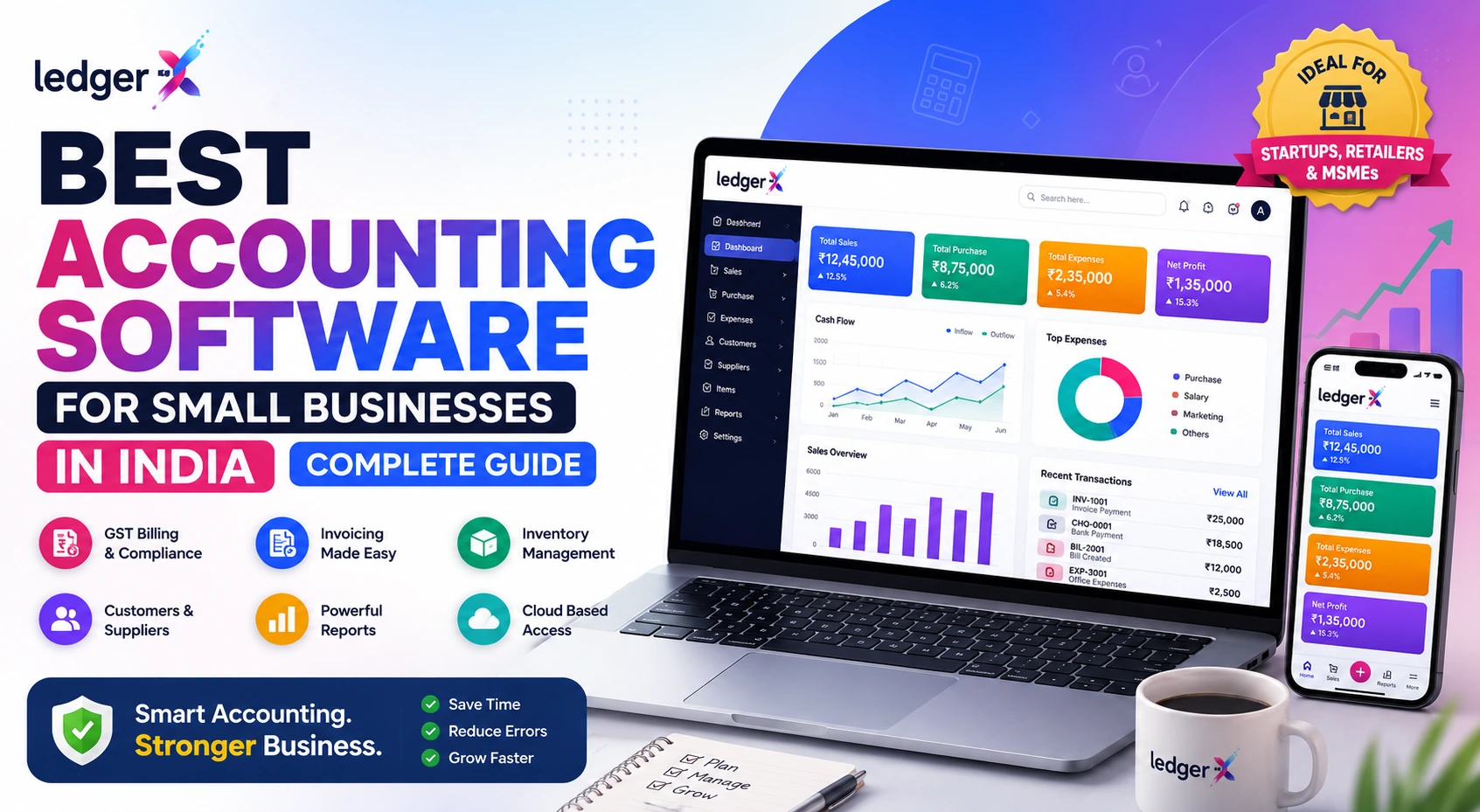
LedgerX automatically tracks your business finances in real time.
With LedgerX you can:
- Monitor cash and bank balances
- Track customer outstanding invoices
- Manage supplier payments
- Monitor inventory values
- Calculate GST payable
- Generate Balance Sheets instantly
- View working capital reports
- Access real-time financial dashboards
Everything is updated automatically as transactions are recorded.
Common Mistakes Businesses Make
Avoid these common accounting mistakes:
❌ Forgetting outstanding customer invoices
❌ Not recording supplier bills
❌ Incorrect inventory valuation
❌ Missing GST liabilities
❌ Delayed expense entries
❌ Manual balance sheet calculations
Cloud accounting software like LedgerX helps reduce these errors through automation.
Benefits of Using LedgerX
LedgerX provides businesses with:
- Cloud-based accounting
- GST-ready invoicing
- Inventory management
- Customer and supplier management
- Profit & Loss Reports
- Balance Sheet Reports
- AI-powered business insights
- Automatic financial reporting
Whether you're a startup, retailer, wholesaler, manufacturer, or service provider, LedgerX keeps your financial data accurate and accessible from anywhere.
Frequently Asked Questions
What are current assets?
Current assets are assets that can be converted into cash or used within one year, such as cash, inventory, and accounts receivable.
What are current liabilities?
Current liabilities are short-term financial obligations due within one year, including supplier payments, GST payable, and salaries.
Why are current assets and liabilities important?
They help businesses evaluate liquidity, manage cash flow, calculate working capital, and prepare accurate balance sheets.
Does LedgerX automatically calculate current assets and liabilities?
Yes. LedgerX automatically updates balances as you record sales, purchases, expenses, payments, receipts, inventory, and GST transactions.
Conclusion
Current assets and current liabilities provide a clear picture of your business's short-term financial health. Monitoring them regularly helps improve cash flow, maintain liquidity, and support smarter business decisions.
With LedgerX Cloud Accounting Software, you can automatically track assets, liabilities, inventory, GST, receivables, payables, and generate accurate balance sheets in real time.