How to Prepare an Opening Balance Sheet (2026 Guide for Small Businesses)
When starting a new business or migrating to a new accounting software, the first step is entering your opening balance. An accurate opening balance ensures your financial reports, GST records, and business accounts remain correct from day one.
This guide explains everything you need to know about creating an opening balance sheet.
What is an Opening Balance?
An opening balance is the value of all your business assets, liabilities, and owner's capital at the beginning of an accounting period.
It acts as the starting point for all future accounting transactions.
For example, if your business already has:
- ₹2,00,000 in the bank
- ₹50,000 cash
- ₹1,20,000 inventory
- ₹40,000 outstanding supplier payments
these values become your opening balances.
Information Required Before Entering Opening Balance
Before creating your opening balance sheet, collect the following:
- Bank account balances
- Cash balance
- Customer outstanding invoices
- Supplier outstanding bills
- Inventory value
- Fixed assets
- Loans and liabilities
- GST balances
- Owner's capital
Having these figures ready helps maintain accurate accounting records.
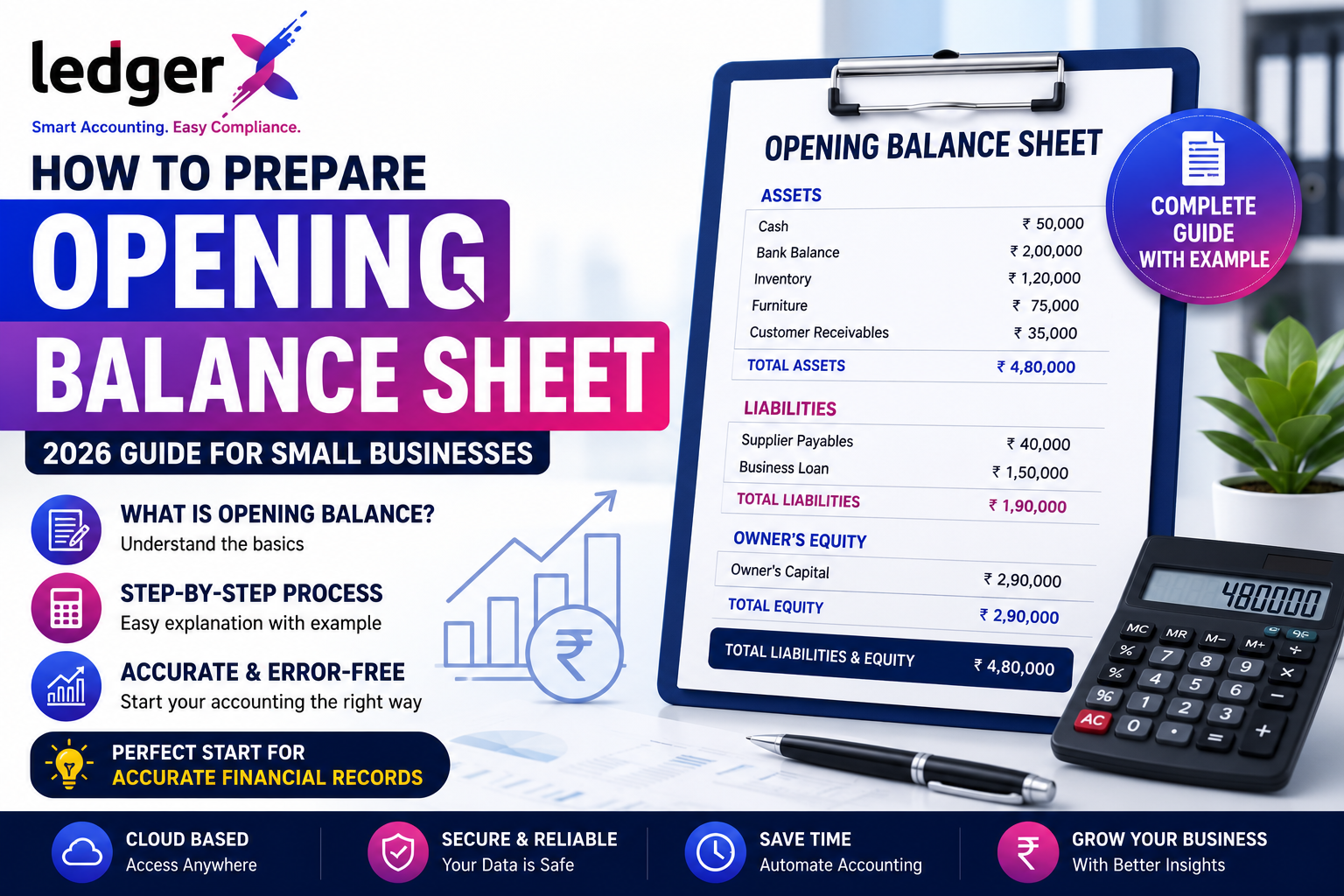
Example of an Opening Balance Sheet
| Account | Amount |
|---|---|
| Cash | ₹50,000 |
| Bank | ₹2,00,000 |
| Inventory | ₹1,20,000 |
| Furniture | ₹75,000 |
| Customer Receivables | ₹35,000 |
| Supplier Payables | ₹40,000 |
| Business Loan | ₹1,50,000 |
| Owner's Capital | ₹2,90,000 |
This becomes the foundation for future accounting transactions.
How to Record Opening Balance in LedgerX
LedgerX makes setting up opening balances simple.
- Create your company.
- Configure GST settings.
- Enter customer and supplier balances.
- Add bank and cash balances.
- Import inventory and fixed assets.
- Verify the Balance Sheet.
- Save your opening balances.
Once completed, LedgerX automatically uses these values for reports, invoicing, and GST calculations.
Common Mistakes to Avoid
Many businesses make these mistakes while entering opening balances:
- Forgetting customer outstanding invoices
- Missing supplier balances
- Incorrect inventory valuation
- Entering duplicate bank balances
- Not verifying the Balance Sheet after setup
Review your figures carefully before beginning daily transactions.
Why Accurate Opening Balances Matter
Correct opening balances help you:
- Generate accurate Profit & Loss reports
- Prepare Balance Sheets
- File GST returns correctly
- Track business performance
- Maintain clean accounting records
- Avoid reconciliation errors
Manage Your Business Easily with LedgerX
LedgerX is a cloud-based accounting software designed for Indian businesses. It allows you to manage opening balances, GST billing, inventory, expenses, purchases, sales, and financial reports from one platform.
Whether you're starting a new business or moving from another accounting software, LedgerX simplifies the setup process and helps you maintain accurate financial records from day one.
Conclusion
A properly prepared opening balance sheet is the foundation of accurate business accounting. By entering your opening balances correctly, you ensure reliable financial reports and smooth day-to-day bookkeeping.
With LedgerX Accounting Software, you can quickly record opening balances and start managing your business with confidence.