
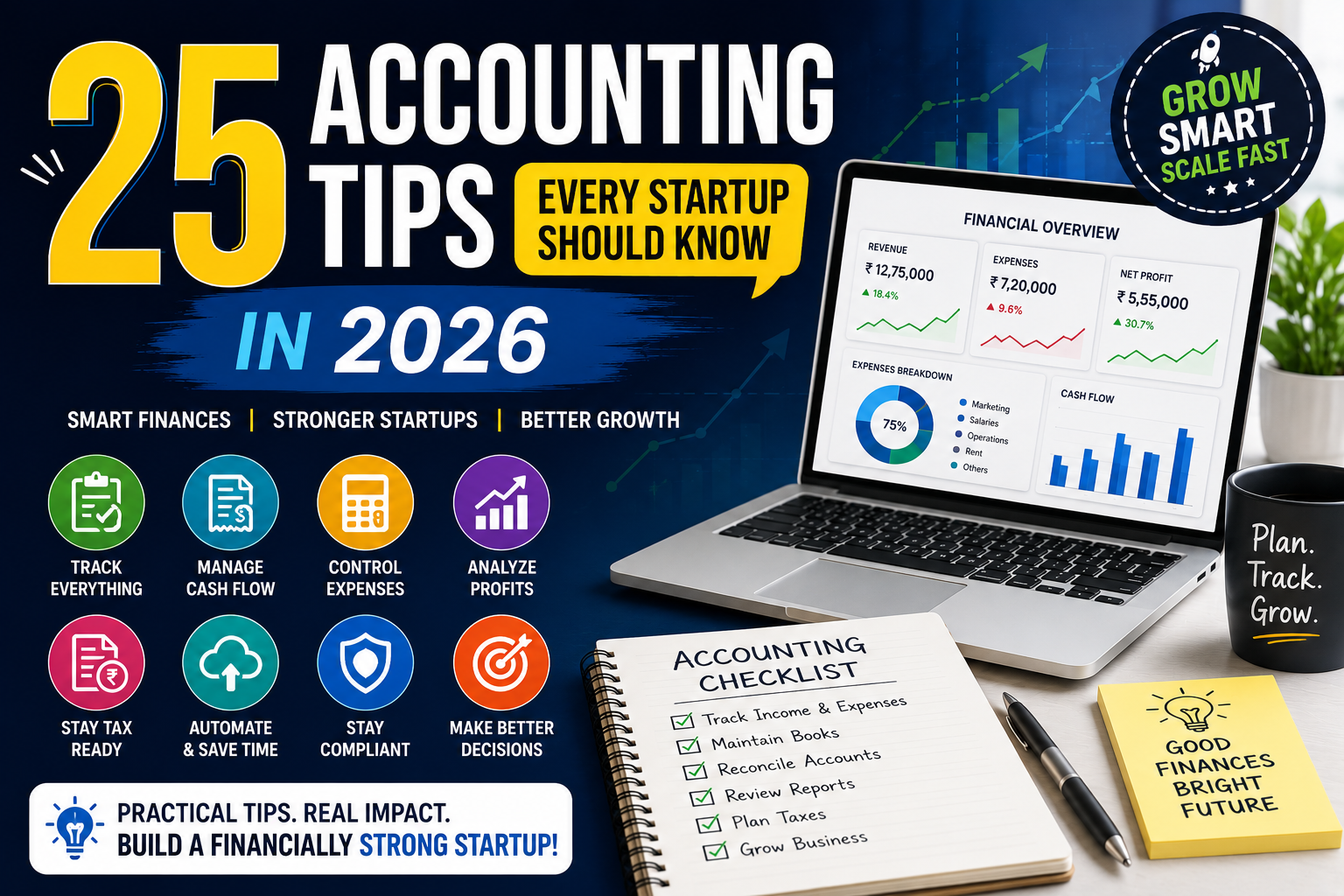
25 Accounting Tips Every Startup Should Know
Starting a business is exciting, but managing finances is often one of the biggest challenges for new entrepreneurs. Poor accounting practices can lead to cash flow issues, missed tax deadlines, compliance problems, and difficulty making informed business decisions.
Whether you're running a technology startup, retail business, consulting firm, or service company, following good accounting practices from day one can save time, reduce stress, and support long-term growth.
Here are 25 accounting tips every startup should know.
1. Separate Business and Personal Finances
Always use a dedicated business bank account. Mixing personal and business transactions makes accounting and tax filing much more difficult.
2. Use Accounting Software
Avoid managing accounts with spreadsheets alone. A cloud accounting platform like LedgerX helps automate invoicing, expense tracking, GST billing, and financial reporting.
3. Record Every Transaction
Every sale, purchase, expense, and payment should be recorded accurately to maintain reliable financial records.
4. Monitor Cash Flow Regularly
Cash flow determines whether your business can pay salaries, suppliers, and operating expenses. Review it frequently instead of waiting until month-end.
5. Create GST-Compliant Invoices
Always issue professional GST invoices with the correct tax rates, invoice numbers, and customer details.
6. Track Business Expenses
Record office expenses, travel costs, software subscriptions, marketing expenses, and utilities to understand where your money goes.
7. Reconcile Bank Statements
Compare your accounting records with your bank statement every month to identify missing or incorrect transactions.
8. Maintain Accurate Inventory
If you sell products, regularly monitor stock levels to prevent shortages, overstocking, and inventory losses.
9. Back Up Financial Data
Cloud accounting software automatically protects your business data from accidental loss.
10. Understand Basic Financial Reports
Learn how to read:
- Profit & Loss Statement
- Balance Sheet
- Cash Flow Statement
These reports help you evaluate business performance.
11. Keep Customer Records Updated
Maintain accurate customer details to improve invoicing and payment collection.
12. Track Outstanding Payments
Follow up on overdue invoices to maintain healthy cash flow.
13. Manage Supplier Payments
Pay suppliers on time to build strong business relationships and avoid penalties.
14. Budget for Taxes
Set aside money for GST and other taxes instead of waiting until payment deadlines.
15. Review Monthly Performance
Check monthly sales, expenses, profits, and cash flow to identify trends early.
16. Automate Repetitive Tasks
Automating invoice creation, expense tracking, and reporting saves time and reduces manual errors.
17. Set Financial Goals
Define monthly revenue, profit, and expense targets to measure business growth.
18. Limit Unnecessary Expenses
Review subscriptions, marketing costs, and operational expenses regularly to improve profitability.
19. Secure Financial Data
Only authorized users should have access to sensitive accounting information.
20. Keep Digital Copies of Bills
Store invoices and receipts digitally for easier record keeping and audits.
21. Use Cloud Accounting
Cloud accounting lets you manage your business from anywhere while keeping your data synchronized across devices.
22. Review Financial Reports Frequently
Don't wait until year-end. Regular financial reporting helps you make informed decisions.
23. Stay GST Compliant
Ensure invoices, tax calculations, and GST returns follow the latest regulations.
24. Plan for Business Growth
Choose accounting software that can scale as your business grows and your transaction volume increases.
25. Invest in the Right Accounting Solution
Modern startups benefit from accounting software that combines:
- GST Billing
- Inventory Management
- Customer Management
- Expense Tracking
- Financial Reports
- Cloud Access
- AI-Powered Insights
Platforms like LedgerX help startups manage daily accounting operations while providing real-time business visibility.
Why Startups Choose LedgerX
LedgerX is designed for Indian startups and small businesses that want a simple yet powerful cloud accounting solution.
Key features include:
- GST Billing
- Cloud Accounting
- Inventory Management
- Sales & Purchase Management
- Customer & Supplier Management
- Financial Reports
- AI Business Insights
- Android App
- Multi-user Access
- Secure Cloud Backup
Instead of using multiple tools, startups can manage accounting, billing, and reporting from one platform.
Frequently Asked Questions
Why is accounting important for startups?
Accounting helps startups monitor cash flow, manage expenses, stay GST compliant, and make informed business decisions.
What is the best accounting software for startups?
The best accounting software depends on your requirements. Businesses should look for cloud access, GST billing, inventory management, reporting, and scalability. LedgerX offers these capabilities in a single platform.
Should startups use cloud accounting software?
Yes. Cloud accounting improves accessibility, collaboration, security, and automatic data backup compared to manual methods.
How often should startups review financial reports?
It's recommended to review key financial reports every month to monitor performance and identify issues early.
Can accounting software help reduce errors?
Yes. Automated calculations, GST compliance features, and centralized record keeping significantly reduce manual accounting errors.
Conclusion
Strong accounting practices are essential for every startup. By following these 25 tips, founders can improve financial control, maintain compliance, and build a solid foundation for sustainable growth.
Using a modern cloud accounting solution such as LedgerX makes it easier to manage invoicing, GST billing, expenses, inventory, and financial reporting, allowing startups to spend more time growing their business and less time on manual bookkeeping.

.png)