.png)
How to Prepare a Profit and Loss Statement (2026 Guide)
Understanding whether your business is making a profit or running at a loss is essential for long-term success. One of the most important financial reports used by businesses is the Profit and Loss Statement (P&L Statement).
Whether you're a startup, retailer, wholesaler, manufacturer, freelancer, or service provider, a well-prepared Profit and Loss Statement helps you evaluate business performance, control expenses, and make informed financial decisions.
In this guide, you'll learn what a Profit and Loss Statement is, how to prepare one, and how LedgerX makes the process simple through automated financial reporting.
What is a Profit and Loss Statement?
A Profit and Loss Statement, also known as an Income Statement, is a financial report that summarizes your business's income, expenses, and net profit or loss over a specific period.
It answers one important question:
"Did my business make money during this period?"
The report helps business owners, accountants, investors, and lenders understand the financial health of a business.
Why is a Profit and Loss Statement Important?
Preparing a Profit and Loss Statement helps businesses:
- Measure business profitability
- Track revenue growth
- Monitor operating expenses
- Improve budgeting
- Prepare tax returns
- Make informed business decisions
- Identify unnecessary expenses
- Evaluate financial performance over time
Regularly reviewing this report helps businesses respond quickly to financial changes.
Components of a Profit and Loss Statement
A standard Profit and Loss Statement includes the following sections:
1. Revenue
Revenue is the total income earned from selling products or services before deducting expenses.
Examples include:
- Sales Revenue
- Service Income
- Other Operating Income
2. Cost of Goods Sold (COGS)
COGS represents the direct cost of producing or purchasing the goods sold.
Examples:
- Purchase Cost
- Manufacturing Cost
- Raw Materials
- Direct Labour
3. Gross Profit
Gross Profit is calculated as:
Revenue – Cost of Goods Sold
This shows how much profit remains after covering the direct costs of sales.
4. Operating Expenses
These are the daily expenses required to run the business.
Examples include:
- Rent
- Salaries
- Electricity
- Internet
- Marketing
- Office Supplies
- Software Subscriptions
- Travel Expenses
5. Operating Profit
Operating Profit is calculated by subtracting operating expenses from gross profit.
This shows how efficiently the business is being managed.
6. Other Income and Expenses
Include any non-operating income or expenses, such as:
- Interest Income
- Bank Charges
- Investment Income
- Miscellaneous Expenses
7. Net Profit
Finally:
Net Profit = Total Revenue – Total Expenses
A positive value indicates a profit, while a negative value indicates a loss.
Example Profit and Loss Statement
| Particulars | Amount (₹) |
|---|---|
| Sales Revenue | 8,00,000 |
| Cost of Goods Sold | 4,80,000 |
| Gross Profit | 3,20,000 |
| Operating Expenses | 1,40,000 |
| Other Expenses | 20,000 |
| Net Profit | 1,60,000 |
This simple example shows how income and expenses are summarized to determine profitability.
How to Prepare a Profit and Loss Statement
Step 1: Record All Income
Record all revenue generated from:
- Product Sales
- Service Income
- Other Business Income
LedgerX automatically records sales transactions when invoices are created.
Step 2: Record Business Expenses
Maintain records of all expenses, including:
- Purchases
- Rent
- Salaries
- Utilities
- Marketing
- Transportation
- Office Expenses
Accurate expense tracking ensures your report reflects the true cost of running the business.
Step 3: Calculate Gross Profit
Subtract the Cost of Goods Sold from Total Revenue.
This gives you the gross profit generated by your business.
Step 4: Deduct Operating Expenses
Subtract all operating expenses from the gross profit.
This helps determine your operating profit.
Step 5: Calculate Net Profit
Add or subtract any additional income or expenses to arrive at your final net profit or net loss.
Common Mistakes to Avoid
When preparing a Profit and Loss Statement, avoid these mistakes:
- Missing income entries
- Forgetting business expenses
- Mixing personal and business expenses
- Incorrect GST calculations
- Ignoring inventory adjustments
- Delaying bookkeeping
- Using outdated financial data
Maintaining accurate records throughout the year reduces these issues.
How LedgerX Helps Generate Profit and Loss Reports
Instead of manually calculating revenue and expenses, LedgerX automatically generates a Profit and Loss Report using your recorded business transactions.
With LedgerX, you can:
- Record sales and purchases
- Track expenses
- Manage inventory
- Generate GST-compliant invoices
- View Profit & Loss Reports instantly
- Access reports from anywhere using cloud accounting
Because all transactions are connected, your financial reports remain accurate and up to date.
Benefits of Using LedgerX for Financial Reporting
LedgerX helps businesses:
- Save time on manual calculations
- Reduce bookkeeping errors
- Monitor profitability in real time
- Generate financial reports instantly
- Improve business decision-making
- Stay organized for tax filing and audits
Whether you're a startup or an established business, automated reporting simplifies financial management.
Frequently Asked Questions
What is a Profit and Loss Statement?
A Profit and Loss Statement is a financial report that summarizes a business's income, expenses, and profit or loss over a specific period.
Why is a Profit and Loss Statement important?
It helps businesses understand profitability, monitor expenses, evaluate performance, and make informed financial decisions.
How often should I prepare a Profit and Loss Statement?
Most businesses review it monthly, quarterly, and annually to monitor financial performance.
Can LedgerX generate Profit and Loss Reports automatically?
Yes. LedgerX automatically generates Profit and Loss Reports based on your recorded sales, purchases, expenses, and other business transactions.
Is a Profit and Loss Statement the same as a Balance Sheet?
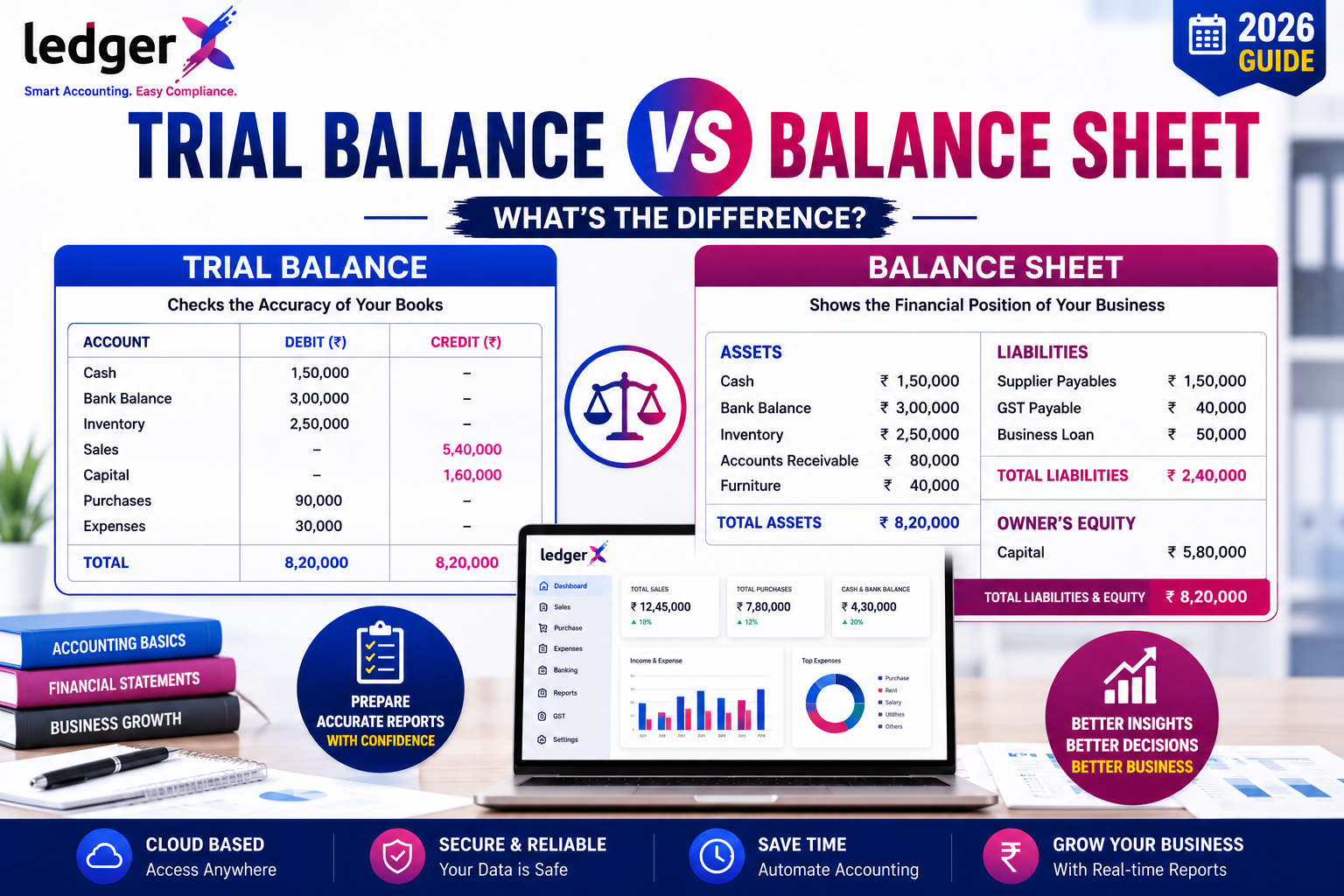
No. A Profit and Loss Statement shows income and expenses over a period, while a Balance Sheet shows assets, liabilities, and equity at a specific point in time.
Conclusion
A Profit and Loss Statement is one of the most valuable reports for understanding your business's financial performance. It helps you identify revenue trends, control expenses, and measure profitability.
Instead of spending hours preparing reports manually, businesses can use LedgerX to automatically generate accurate Profit and Loss Statements using real-time accounting data.
With cloud-based accounting, GST billing, inventory management, expense tracking, and financial reporting in one platform, LedgerX helps businesses focus on growth while keeping financial records organized.