
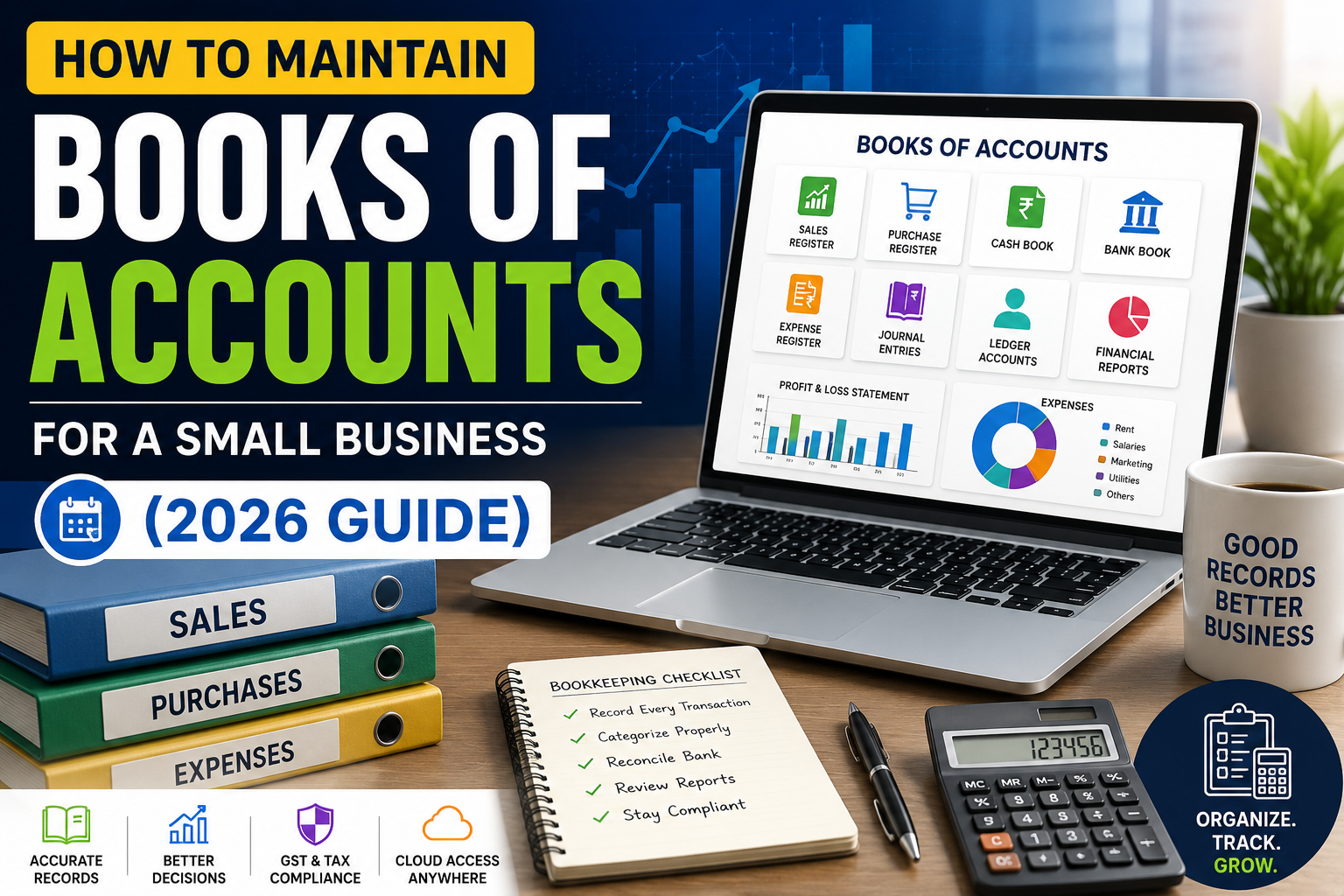
How to Maintain Books of Accounts for a Small Business
Maintaining books of accounts is one of the most important responsibilities for every small business owner. Whether you run a retail shop, startup, manufacturing business, wholesale company, or service business, accurate financial records help you understand your business performance, comply with tax regulations, and make better financial decisions.
Many businesses begin by recording transactions in notebooks or spreadsheets. While this may work initially, it becomes difficult to manage as the business grows. Using cloud accounting software like LedgerX makes bookkeeping easier, more accurate, and more organized.
In this guide, you'll learn how to maintain books of accounts step by step and the best practices every business should follow.
What Are Books of Accounts?
Books of accounts are the financial records maintained by a business to track all money coming in and going out. These records provide a complete picture of your company's financial health.
Maintaining accurate books helps businesses:
- Track income and expenses
- Monitor cash flow
- Prepare financial statements
- File GST returns
- Manage inventory
- Understand profitability
- Support audits and compliance
Why Maintaining Books of Accounts is Important
Proper bookkeeping offers several benefits:
Better Financial Control
Know exactly how much your business earns and spends.
GST Compliance
Maintain accurate records required for GST filing and tax reporting.
Improved Decision Making
Reliable financial reports help you plan business growth and control costs.
Easier Loan Applications
Banks and financial institutions often require organized financial records before approving loans.
Reduced Accounting Errors
Accurate bookkeeping minimizes mistakes and simplifies year-end accounting.
Essential Books of Accounts Every Business Should Maintain
1. Sales Register
Record every sales transaction including:
- Invoice Number
- Customer Name
- Date
- Amount
- GST Details
LedgerX automatically records sales invoices in the Sales module.
2. Purchase Register
Track all purchases made for your business.
Include:
- Supplier Name
- Invoice Number
- Purchase Amount
- GST Details
This helps maintain accurate expense and inventory records.
3. Cash Book
A cash book records all cash receipts and payments made by the business.
Maintain entries for:
- Cash Sales
- Cash Purchases
- Office Expenses
- Petty Cash
4. Bank Book
Track all transactions made through your business bank account.
Regularly reconcile your accounting records with bank statements.
5. Expense Register
Record business expenses such as:
- Rent
- Electricity
- Internet
- Marketing
- Salaries
- Office Supplies
- Travel
LedgerX automatically categorizes expenses, making it easier to analyze business costs.
6. Inventory Register
If you sell products, maintain records of:
- Stock Received
- Stock Sold
- Current Inventory
- Stock Value
LedgerX updates inventory automatically whenever purchases or sales are recorded.
7. Customer Ledger
Maintain customer information including:
- Outstanding Payments
- Payment History
- Credit Sales
- Contact Details
This improves payment collection and customer management.
8. Supplier Ledger
Track supplier transactions including:
- Purchases
- Outstanding Bills
- Payment Status
- Supplier History
Step-by-Step Guide to Maintaining Books of Accounts
Step 1: Record Every Transaction
Never delay recording:
- Sales
- Purchases
- Expenses
- Receipts
- Payments
Recording transactions daily reduces errors and keeps records accurate.
Step 2: Organize Business Documents
Store all:
- Purchase Bills
- Sales Invoices
- Receipts
- Bank Statements
- Payment Vouchers
Keeping digital copies helps during audits and tax filing.
Step 3: Use Proper Accounting Categories
Classify transactions correctly into:
- Sales
- Purchases
- Expenses
- Assets
- Liabilities
- Income
- Capital
Correct categorization improves reporting accuracy.
Step 4: Reconcile Bank Accounts
Compare accounting records with your bank statement every month to identify missing or incorrect entries.
Step 5: Monitor Financial Reports
Review reports such as:
- Profit & Loss Statement
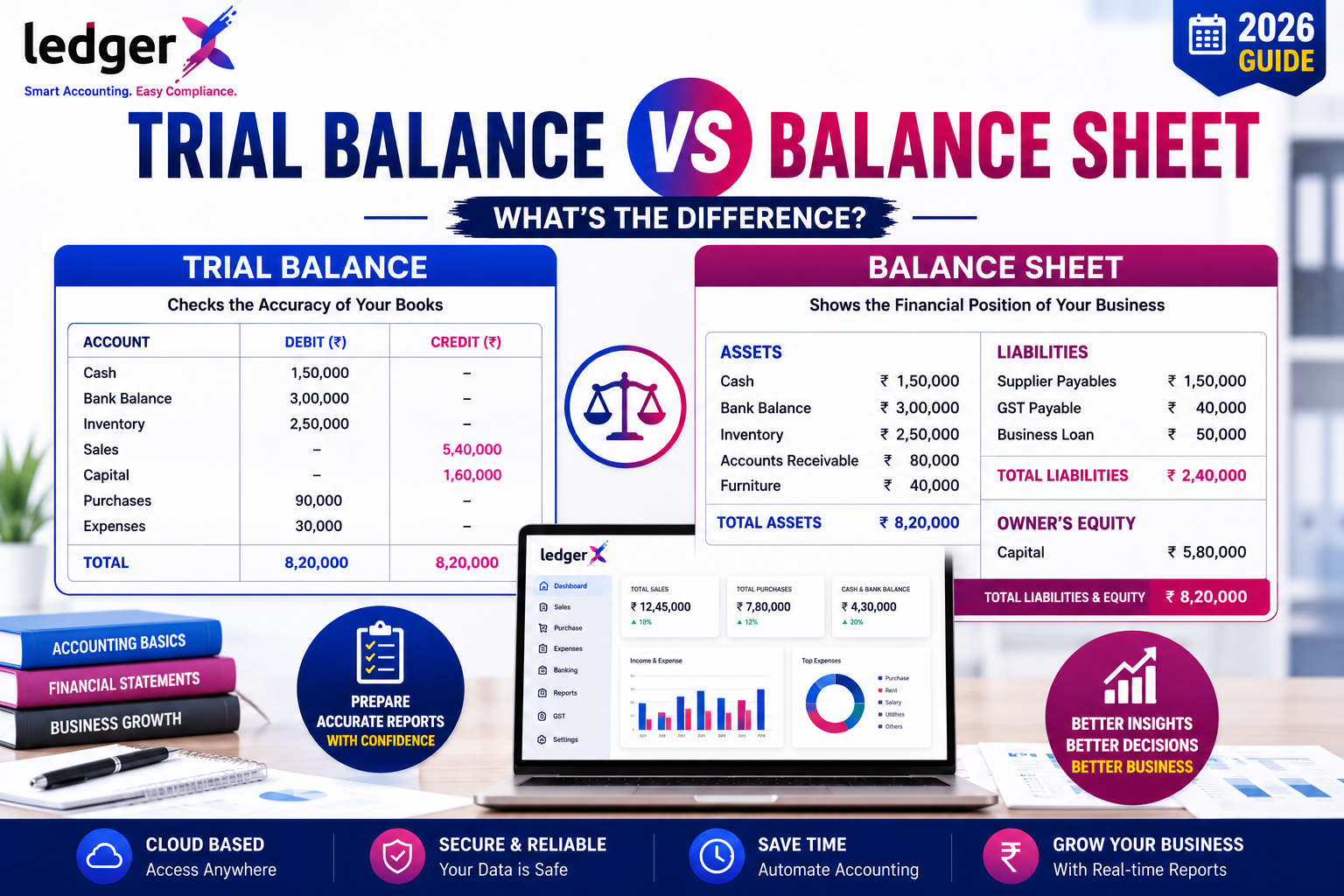
- Balance Sheet
- Cash Flow Statement
- Trial Balance
These reports help you understand business performance.
Step 6: Review Outstanding Payments
Follow up on unpaid customer invoices and ensure supplier payments are made on time.
Common Bookkeeping Mistakes to Avoid
Many small businesses make these common mistakes:
- Mixing personal and business expenses
- Missing invoice records
- Incorrect GST calculations
- Delaying bookkeeping
- Ignoring bank reconciliation
- Not tracking inventory
- Losing receipts
- Using outdated spreadsheets
Avoiding these mistakes keeps your financial records clean and reliable.
How LedgerX Simplifies Bookkeeping
Instead of maintaining multiple spreadsheets and manual registers, LedgerX provides an integrated accounting platform that manages your books automatically.
With LedgerX you can:
- Record sales and purchases
- Generate GST invoices
- Track expenses
- Manage inventory
- Monitor customer balances
- Manage supplier accounts
- Generate financial reports
- Access records from anywhere
- Back up data securely in the cloud
This reduces manual work and allows business owners to focus on growing their business.
Benefits of Using Cloud Accounting Software
Cloud accounting software offers significant advantages over traditional bookkeeping methods:
- Real-time access to financial data
- Automatic backups
- Multi-user collaboration
- Secure cloud storage
- Faster reporting
- Reduced manual errors
- Easy scalability
Businesses using cloud accounting can make faster and more informed decisions.
Best Practices for Small Business Accounting
To maintain accurate books of accounts:
- Record transactions daily.
- Generate GST-compliant invoices.
- Reconcile bank accounts every month.
- Track inventory regularly.
- Review financial reports monthly.
- Maintain digital copies of invoices and receipts.
- Monitor customer outstanding balances.
- Keep supplier accounts updated.
- Use cloud accounting software instead of spreadsheets.
Following these habits improves financial discipline and reduces compliance risks.
Frequently Asked Questions
What are books of accounts?
Books of accounts are financial records that track all business transactions, including sales, purchases, expenses, receipts, and payments.
Why should small businesses maintain books of accounts?
Maintaining accurate books helps businesses manage finances, comply with GST regulations, prepare financial reports, and make informed business decisions.
Is bookkeeping mandatory for businesses?
Businesses are generally required to maintain proper financial records under applicable tax and regulatory requirements. The exact obligations depend on the nature and size of the business, so consult the relevant regulations or a qualified professional for your situation.
Can accounting software help maintain books of accounts?
Yes. Accounting software like LedgerX automates bookkeeping, GST billing, inventory management, expense tracking, and financial reporting.
Is LedgerX suitable for startups and small businesses?
Yes. LedgerX is designed for Indian startups, retailers, wholesalers, manufacturers, and service businesses that need cloud-based accounting, GST billing, inventory management, and business reporting.
Conclusion
Maintaining accurate books of accounts is essential for every successful business. Organized financial records help you monitor profitability, improve cash flow, stay GST compliant, and make better business decisions.
While manual bookkeeping may work initially, modern businesses benefit from cloud accounting solutions that automate routine tasks and improve accuracy.
With LedgerX, you can manage your books of accounts, generate GST invoices, track inventory, record expenses, monitor customer and supplier balances, and access financial reports from a single cloud-based platform.

.png)