Invoice Number Meaning: Format, Rules, Examples & Best Practices
Every business that creates invoices needs a reliable way to identify each transaction. An invoice number helps businesses organise sales records, track payments, communicate with customers, and retrieve documents when needed.
Understanding the invoice number meaning is particularly important for Indian businesses that issue GST invoices and maintain sales records for accounting and tax purposes.
In this guide, we'll explain what an invoice number is, show common invoice number formats, discuss numbering practices for GST invoices, and explain how to create a consistent numbering system for your business.
What Is an Invoice Number?
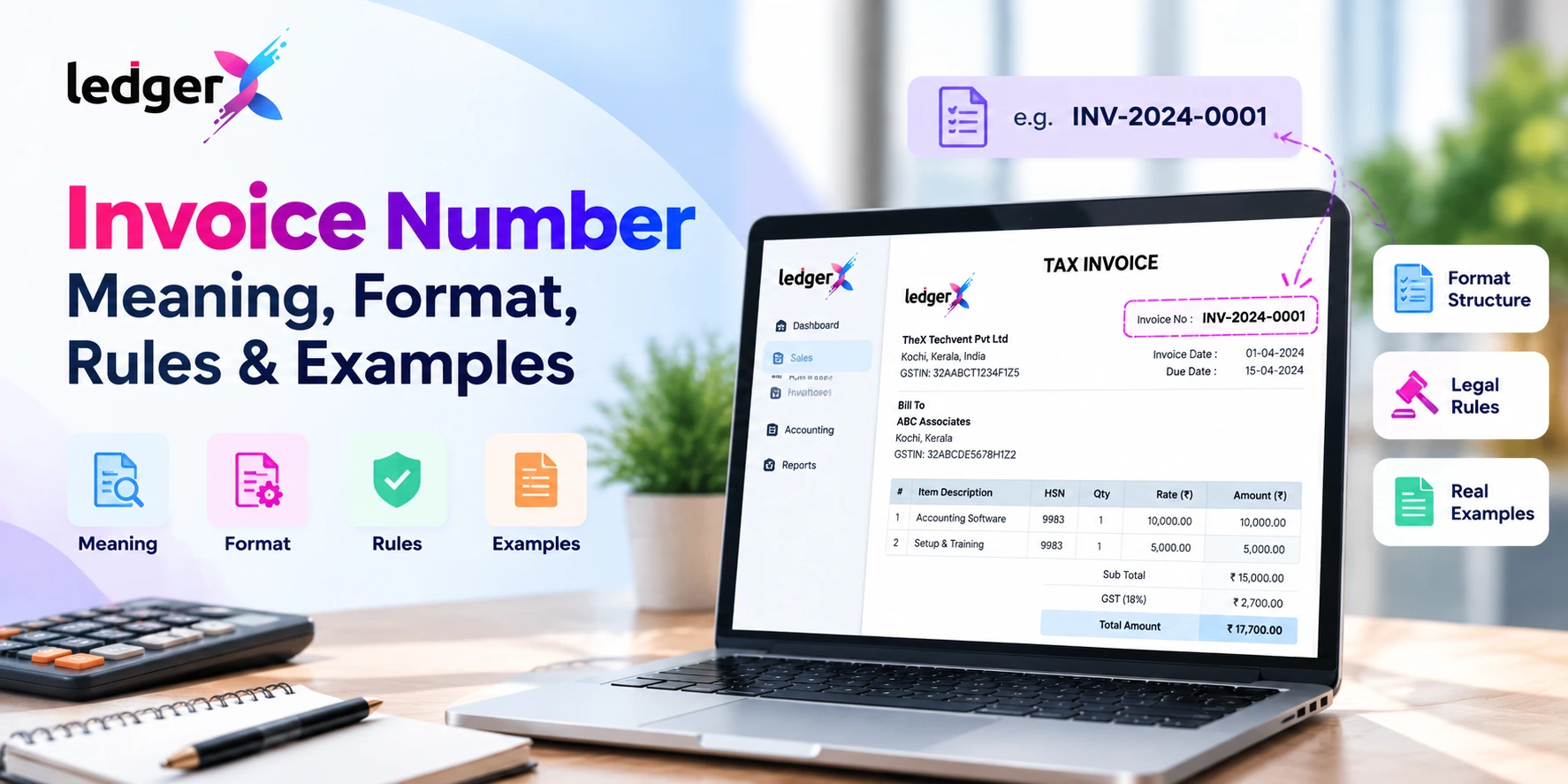
An invoice number is a unique identifier assigned to an invoice. It distinguishes one invoice from another and helps a business track transactions throughout its accounting records.
For example, a business might issue invoices numbered:
- INV-001
- INV-002
- INV-003
- INV-004
Each number identifies a particular invoice. When a customer asks about a payment or an accountant needs to verify a sale, the invoice number makes it easier to locate the correct document.
An invoice number is different from a purchase order number, customer ID, GSTIN, or payment reference number. These identifiers serve different purposes and should not be used interchangeably.
What Is a Sales Invoice Number?
A sales invoice number is the unique number assigned to an invoice issued by a seller to a customer for goods or services supplied.
For example, a wholesale business sells goods worth ₹25,000 to a retailer and issues an invoice numbered SAL-2026-001.
The seller can use this number to locate the sales transaction, check whether payment has been received, and reconcile the invoice with its accounting records.
A sales invoice number should follow the business's established numbering system and applicable invoicing requirements.
Invoice Number Format: Examples
There is no single numbering format that every business must use in every situation. A suitable format should be easy to understand, consistently applied, and compliant with applicable rules.
Here are some illustrative formats.
| Invoice number format | Example | Suitable use |
|---|---|---|
| Sequential | INV-001 | Small businesses |
| Year-based | INV-2026-001 | Businesses organising invoices by year |
| Customer-category based | RET-2026-001 | Businesses with distinct sales categories |
| Branch-based | KOC-2026-001 | Businesses tracking invoices by branch |
| Service-based | SVC-2026-001 | Service providers |
| Retail sales | POS-2026-001 | Retail billing systems, subject to the applicable invoicing requirements |
These are examples of internal numbering conventions, not prescribed formats for every GST invoice.
Which Invoice Number Format Is Best?
For a small business, a simple sequential format may be sufficient. A business with multiple branches or sales channels may prefer a format that helps identify the issuing branch or transaction category.
For example:
INV-2026-001
This format can be interpreted as an invoice prefix, the year, and the sequence number.
Choose a format that your team can apply consistently. Avoid changing the numbering method frequently or creating multiple overlapping sequences without a clear reason.
GST Invoice Number Rules in India
Businesses registered under GST should pay particular attention to invoice numbering.
Under the GST invoice requirements, a tax invoice generally needs a consecutive serial number that is unique for a financial year. The applicable rules permit specified characters and allow one or more series, subject to the prescribed conditions.
The relevant invoice requirements are set out in Rule 46 of the CGST Rules, 2017, as amended.
When setting up your numbering system, consider the following:
- Use a consecutive sequence. Maintain an orderly invoice series and follow the applicable requirements for consecutive serial numbers.
- Ensure uniqueness. An invoice number should distinguish the invoice within the relevant series and financial year.
- Follow the prescribed character limits and permitted characters. GST invoice serial numbers are subject to specific requirements, so do not assume that every custom format is valid.
- Maintain records of issued invoices. Keep invoice copies and related accounting records organised.
- Handle cancelled invoices properly. Document cancellations and preserve the relevant records instead of silently deleting issued invoices.
- Review the current rules. Confirm the requirements applicable to your business, including any special provisions relevant to your registration or invoicing process.
The precise compliance requirements can depend on the transaction and the applicable GST provisions. Businesses should consult the current rules or a qualified tax professional where necessary.
How to Create an Invoice Number
Follow these steps to establish a practical invoice numbering system.
Step 1: Select a Prefix
Choose a short prefix that identifies the document type.
Examples include:
- INV for invoices
- SAL for sales invoices
- SVC for service invoices
The prefix is an internal organisational choice, not a substitute for statutory invoice details.
Step 2: Decide Whether to Include the Year
Some businesses include the financial year or calendar year in the invoice number.
For example:
INV-2026-001
If you use a year-based sequence, establish clear rules for when the sequence resets and ensure the arrangement complies with the applicable requirements.
Step 3: Establish a Sequence
Assign the next available number when issuing an invoice. Maintain a reliable record so that team members do not accidentally assign the same number to different invoices.
Step 4: Apply the Same Rules Consistently
Use a documented process for invoices created by different employees, branches, or billing channels. If multiple series are required, make sure each series is managed clearly and complies with applicable rules.
Step 5: Connect Invoices to Accounting Records
The invoice number should help your team locate the related customer, sales entry, payment status, tax details, and supporting documents.
A consistent connection between invoices and accounting records reduces manual searching and makes reconciliation easier.
Invoice Number vs Invoice Date
An invoice number and invoice date serve different purposes.
| Invoice number | Invoice date |
|---|---|
| Identifies a specific invoice | Records when the invoice was issued |
| Usually follows a numbering sequence | Follows a date format |
| Helps retrieve and track a transaction | Helps establish the transaction timeline |
| Example: INV-2026-001 | Example: 14 October 2026 |
Both are important invoice details, but one cannot replace the other.
Invoice Number vs Order Number
An order number identifies an order placed by a customer or recorded by a business. An invoice number identifies the invoice issued for a transaction.
For example, a customer may place Order ORD-1050. After the goods are supplied, the seller may issue Invoice INV-2026-025.
One order may involve more than one invoice in some business arrangements. Therefore, businesses should maintain separate, clearly identified order and invoice references.
Common Invoice Numbering Mistakes
1. Reusing an Existing Invoice Number
Assigning the same number to two different invoices can cause confusion during payment tracking, reconciliation, and record verification.
2. Changing the Sequence Without Documentation
Unexplained changes can make it difficult to identify missing invoices or understand the records.
3. Deleting Issued Invoices Without a Proper Record
If an issued invoice is cancelled or needs correction, follow the applicable accounting and tax procedures. Preserve the supporting records rather than removing the transaction without an audit trail.
4. Confusing an Invoice Number With a GSTIN
A GSTIN identifies a registered taxpayer. An invoice number identifies a particular invoice. Both may appear on a GST invoice, but they serve different purposes.
5. Managing Invoice Numbers Manually Across Multiple Systems
If invoices are generated in spreadsheets, billing software, and separate branch systems, duplicate numbers and inconsistent records can become harder to prevent.
A centralised process or suitable accounting software can help maintain a more consistent sequence.
How Accounting Software Helps Manage Invoice Numbers
As a business grows, tracking invoices manually can become time-consuming. Accounting software can help businesses create invoices, maintain sales records, and connect invoice details with payments and reports.
When evaluating an invoicing or accounting system, look for features such as:
- Consistent invoice numbering
- GST-ready invoice creation
- Customer and sales records
- Invoice status and payment tracking
- Searchable transaction history
- Accounting and tax reports
- Access controls and reliable record management
LedgerX provides GST billing and accounting features for Indian businesses. Using a centralised system can help reduce repetitive data entry and make invoice records easier to manage.
Businesses should still configure their invoice series appropriately and verify that their invoicing process meets the requirements applicable to them.
Frequently Asked Questions
What does an invoice number mean?
An invoice number is a unique identifier assigned to an invoice. It helps businesses organise sales documents, track payments, and retrieve transaction records.
Is an invoice number mandatory in India?
Tax invoices issued under GST must meet the applicable invoice requirements, including the prescribed serial-number requirements. The exact obligations depend on the type of document and the applicable rules.
Can an invoice number contain letters?
GST invoice serial numbers may contain permitted alphabets, numerals, and specified special characters, subject to the applicable rules. Businesses should verify the current requirements before choosing a format.
Should invoice numbers be sequential?
GST tax invoices are subject to prescribed serial-number requirements, including consecutive numbering within the relevant series. Businesses should configure their numbering system to comply with the rules applicable to their invoices.
Can an invoice number be changed after issuing an invoice?
Do not casually change an issued invoice number. If a correction or cancellation is needed, follow the applicable tax and accounting procedures and maintain supporting documentation.
Can two customers have the same invoice number?
A business should use a numbering system that identifies invoices unambiguously within the relevant series. If multiple series are used, they must be structured and managed in accordance with the applicable requirements.
What is an example of an invoice number?
INV-2026-001 is an illustrative invoice number. It combines a prefix, a year, and a sequence. A business should choose a format that suits its operations and meets the applicable invoicing requirements.
Conclusion
An invoice number is a small but important part of a business's accounting process. A consistent numbering system makes invoices easier to locate, helps track payments, and supports reliable financial records.
For Indian businesses issuing GST invoices, invoice numbering should also comply with the applicable GST requirements. Establish a clear process, maintain accurate records, and review your system as your business grows.
Simplify invoicing and accounting with LedgerX. Explore GST billing, sales records, expense management, and business reporting at ledgerx.biz.